Charles Darwin
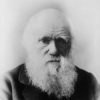
Charles Darwin
Charles Robert Darwin, FRS FRGS FLS FZSwas an English naturalist and geologist, best known for his contributions to the science of evolution. He established that all species of life have descended over time from common ancestors, and in a joint publication with Alfred Russel Wallace introduced his scientific theory that this branching pattern of evolution resulted from a process that he called natural selection, in which the struggle for existence has a similar effect to the artificial selection involved in...
ProfessionScientist
Date of Birth12 February 1809
CityShrewsbury, England
The moral faculties are generally esteemed, and with justice, as of higher value than the intellectual powers. But we should always bear in mind that the activity of the mind in vividly recalling past impressions is one of the fundamental though secondary bases of conscience. This fact affords the strongest argument for educating and stimulating in all possible ways the intellectual faculties of every human being.
Mere chance ... alone would never account for so habitual and large an amount of difference as that between varieties of the same species.
A republic cannot succeed, till it contains a certain body of men imbued with the principles of justice and honour.
As natural selection works solely by and for the good of each being, all corporeal and mental endowments will tend to progress toward perfection.
The most powerful natural species are those that adapt to environmental change without losing their fundamental identity which gives them their competitive advantage.
The explanation of types of structure in classes - as resulting from the will of the Deity, to create animals on certain plans - is no explanation. It has not the character of a physical law and is therefore utterly useless. It foretells nothing because we know nothing of the will of the Deity, how it acts and whether constant or inconstant like that of man.
It is impossible to concieve of this immense and wonderful universe as the result of blind chance or necessity.
We fancied even that the bushes smelt unpleasantly.
The presence of a body of well-instructed men, who have not to labor for their daily bread, is important to a degree which cannot be overestimated; as all high intellectual work is carried on by them, and on such work material progress of all kinds mainly depends, not to mention other and higher advantages.
In the survival of favoured individuals and races, during the constantly-recurring struggle for existence, we see a powerful and ever-acting form of selection.
People complain of the unequal distribution of wealth [but it is a far greater] injustice that any one man should have the power to write so many brilliant essays... There is no one who writes like [Thomas Huxley].
Some call it evolution, And others call it God.
It is a fatal fault to reason whilst observing, though so necessary beforehand and so useful afterwards.
Man may be excused for feeling some pride at having risen, though not through his own exertions, to the very summit of the organic scale; and the fact of his having thus risen, instead of having been aboriginally placed there, may give him hopes for a still higher destiny in the distant future.