Stanley Hauerwas
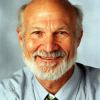
Stanley Hauerwas
Stanley Hauerwasis an American theologian, ethicist, and public intellectual. Hauerwas is a longtime professor at Duke University, serving as the Gilbert T. Rowe Professor of Theological Ethics at Duke Divinity School with a joint appointment at the Duke University School of Law. In the fall of 2014, he also assumed a chair in Theological Ethics at the University of Aberdeen. Before coming to Duke, Hauerwas taught at the University of Notre Dame. Hauerwas is considered by many to be one...
NationalityAmerican
ProfessionTheologian
Date of Birth24 July 1940
CountryUnited States of America
The idea is that Jesus overcame death through the Resurrection. What that does is fail to appreciate the fact that the resurrected Christ is the crucified Christ. It's not like, 'Oh, that was just a mistake, now it's over.' Jesus continues to suffer from our sins.
The fact that monasticism preceded the identification of greed as a primal sin is an important reminder that our very ability to name sin is a theological achievement.
The Christian fact is very straightforward: To be a student is a calling. Your parents are setting up accounts to pay the bills, or you are scraping together your own resources and taking out loans, or a scholarship is making college possible.
The very fact that we find it hard to conceive of an alternative to limitless economic growth is an indication of our spiritual condition.
The very fact that doctrine is hewn from bitter controversy and tested through time is sufficient reason to make them a focus of theology.
When love becomes what Christianity is all about, we can make no sense of Jesus's death and resurrection.
When I started to write 'Hannah's Child,' I realized that this had to be a book of passion, to have a certain kind of vulnerability. I think that people respond to that.
War is America's central liturgical act necessary to renew our sense that we are a nation unlike other nations.
Though the world may often appear to be more charitable than the church, it is crucial to remember that, for the church, the care of the poor cannot be separated from the worship of God.
American Protestants do not have to believe in God because they believe in belief. That is why we have never been able to produce an interesting atheist in America.
The Gospel of John makes explicit what all the Gospels assume - that is, the cross is not a defeat, but the victory of our God.
I want to challenge the presumption that the world cannot know it is the world unless there is an alternative to the world.
From the beginning, Christianity has struggled to sustain the creative tension between the personal appropriation of the gospel and the gospel's universal reach.
Whatever it means for us to exist, we do so as creatures created, as the universe has been created, to glorify God.