Mahatma Gandhi
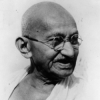
Mahatma Gandhi
Mohandas Karamchand Gandhi; 2 October 1869 – 30 January 1948) was the preeminent leader of the Indian independence movement in British-ruled India. Employing nonviolent civil disobedience, Gandhi led India to independence and inspired movements for civil rights and freedom across the world. The honorific Mahatma—applied to him first in 1914 in South Africa,—is now used worldwide. He is also called Bapuin India. In common parlance in India he is often called Gandhiji. He is unofficially called the Father of the Nation...
NationalityIndian
ProfessionCivil Rights Leader
Date of Birth2 October 1869
CityPortbandar, India
CountryIndia
Mankind is one, seeing that all are equally subject to the moral law. All men are equal in God's eyes.
A man like me cannot but believe that this earthquake is a divine chastisement sent by God for our sins.
If I am true to myself, if I am true to mankind, if I am true to humanity, I must understand all the faults that human flesh is heir to.
I have discovered that man is superior to the system he propounds.
I regard Duryodhana and his party as the baser impulses in man, and Arjuna and his party as the higher impulses.
I cannot picture to myself a time when all mankind will have one religion.
I hold no man to be indispensable for the welfare of the country.
I believe in conversion of mankind, not its destruction.
If Euclid's point, though incapable of being drawn by any human agency, has an imperishable value, my picture has its own for mankind to live.
I believe in advaita, I believe in the essential unity of man and for that matter of all that lives.
It is my firm faith that man is by nature going higher.
The Swaraj of my dream is the poor man's Swaraj.
My own opinion is that just as fundamentally man and woman are one, their problems must be one in essence.
I must refuse to believe that the Germans contemplate with equanimity the evacuation of cities like London for fear of destruction to be wrought by man's inhuman ingenuity.