Dale Carnegie
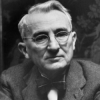
Dale Carnegie
Dale Harbison Carnegiewas an American writer and lecturer and the developer of famous courses in self-improvement, salesmanship, corporate training, public speaking, and interpersonal skills. Born into poverty on a farm in Missouri, he was the author of How to Win Friends and Influence People, a bestseller that remains popular today. He also wrote How to Stop Worrying and Start Living, Lincoln the Unknown, and several other books...
NationalityAmerican
ProfessionEntrepreneur
Date of Birth24 November 1888
CityMaryville, MO
CountryUnited States of America
An argument would have begun to steam and boil and sputter - and you know how arguments end. Even if I had convinced him that he was wrong, his pride would have made it difficult for him to back down and give in.
criticism is dangerous, because it wounds a person's precious pride, hurt his sense of importace and arouse resentment.
Criticism is futile because it puts a person on the defensive and usually makes them strive to justify themselves. Criticism is dangerous, because it wounds a person's precious pride, hurts their sense of importance, and arouses resentment.
When dealing with people, let us remember that we are not dealing with creatures of logic. We are dealing with creatures of emotion, creatures bristling with prejudices and motivated by pride and vanity. ...Any fool can criticize, condemn, and complain - and most fools do. But it takes character and self-control to be understanding and forgiving.
Why prove to a man he is wrong? Is that going to make him like you? Why not let him save face? He didn't ask for your opinion. He didn't want it. Why argue with him? You can't win an argument, because if you lose, you lose it; and if you win it, you lose it. Why? You will feel fine. But what about him? You have made him feel inferior, you hurt his pride, insult his intelligence, his judgment, and his self-respect, and he'll resent your triumph. That will make him strike back, but it will never make him want to change his mind. A man convinced against his will is of the same opinion still.
One of the most appalling comments on our present way of life is that half of all the beds in our hospitals are reserved for patients with nervous and mental troubles, patients who have collapsed under the crushing burden of accumulated yesterdays and fearful tomorrows. Yet a vast majority of those people would be walking the streets today, leading happy, useful lives, if they had only heeded the words of Jesus: Have no anxiety about the morrow; or the words of Sir William Osler; Live in day-tight compartments.
The chronic kicker, even the most violent critic, will frequently soften and be subdued in the presence of a patient, sympathetic listener— a listener who will be silent while the irate fault-finder dilates like a king cobra and spews the poison out of his system.
Suppose you had inherited the same body and temperament and mind that Al Capone had. Suppose you had had his environment and experiences. You would then be precisely what he was. . . . For it is those things - and only those things - that made him what he was. . . . You deserve very little credit for being what you are - and remember, the people who come to you irritated, bigoted, unreasoning, deserve very little discredit for being what they are.
When Theodore Roosevelt was in the White House, he confessed that if he could be right 75 percent of the time, he would reach the highest measure of his expectation. . . . If that was the highest rating that one of the most distinguished men of the twentieth century could hope to obtain, what about you and me?
My popularity, my happiness and sense of worth depend to no small extent upon my skill in dealing with people.
Nobody kicks a dead dog
Remember my name and you add to my feeling of importance.
A barber lathers a man before he shaves him.
Remember that unjust critisism is often a disquised compliment.