Carl Sagan
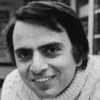
Carl Sagan
Carl Edward Saganwas an American astronomer, cosmologist, astrophysicist, astrobiologist, author, science popularizer, and science communicator in astronomy and other natural sciences. He is best known for his contributions to the scientific research of extraterrestrial life, including experimental demonstration of the production of amino acids from basic chemicals by radiation. Sagan assembled the first physical messages sent into space: the Pioneer plaque and the Voyager Golden Record, universal messages that could potentially be understood by any extraterrestrial intelligence that might find...
NationalityAmerican
ProfessionScientist
Date of Birth9 November 1934
CityBrooklyn, NY
CountryUnited States of America
Scientists can routinely predict a solar eclipse, to the minute, a millennium in advance. You can go to the witch doctor to lift the spell that causes your pernicious anaemia, or you can take Vitamin B12. If you want to save your child from polio, you can pray or you can inoculate. If you're interested in the sex of your unborn child, you can consult plumb-bob danglers all you want . . . but they'll be right, on average, only one time in two. If you want real accuracy . . . try amniocentesis and sonograms. Try science.
The Big Bang is our modern scientific creation myth. It comes from the same human need to solve the cosmological riddle [Where did the universe come from?]
On the day that we do discover that we are not alone, our society may begin to evolve and transform in some incredible and wondrous new ways.
There is a lurking fear that some things are not meant to be known.
Except for fools and madmen, everyone knows that nuclear war would he an unprecedented human catastrophe.
Curiosity and the urge to solve problems are the emotional hallmarks of our species ...
The usual rejoinder to someone who says 'They laughed at Columbus, they laughed at Galileo' is to say 'But they also laughed at Bozo the Clown'.
Perhaps the depth of love can be calibrated by the number of different selves that are actively involved in a given relationship.
By looking far out into space we are also looking far back into time, back toward the horizon of the universe, back toward the epoch of the Big Bang.
And you are made of a hundred trillion cells. We are, each of us, a multitude.
The reappearance of the crescent moon after the new moon; the return of the Sun after a total eclipse, the rising of the Sun in the morning after its troublesome absence at night were noted by people around the world; these phenomena spoke to our ancestors of the possibility of surviving death. Up there in the skies was also a metaphor of immortality.
Any faith that admires truth, that strives to know God, must be brave enough to accommodate the universe.
Books are like seeds. They can lie dormant for centuries and then flower in the most unpromising soil.
We have begun to contemplate our origins: starstuff pondering the stars; organized assemblages of ten billion billion billion atoms considering the evolution of atoms; tracing the long journey by which, here at least, consciousness arose.