Carl Sagan
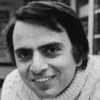
Carl Sagan
Carl Edward Saganwas an American astronomer, cosmologist, astrophysicist, astrobiologist, author, science popularizer, and science communicator in astronomy and other natural sciences. He is best known for his contributions to the scientific research of extraterrestrial life, including experimental demonstration of the production of amino acids from basic chemicals by radiation. Sagan assembled the first physical messages sent into space: the Pioneer plaque and the Voyager Golden Record, universal messages that could potentially be understood by any extraterrestrial intelligence that might find...
NationalityAmerican
ProfessionScientist
Date of Birth9 November 1934
CityBrooklyn, NY
CountryUnited States of America
If we ruin the earth, there is no place else to go
Science is only a Latin word for knowledge
It goes with a courageous intent to greet the universe as it really is, not to foist our emotional predispositions on it but to courageously accept what our explorations tell us.
One of the reasons for its success is that science has a built-in, error-correcting machinery at its very heart. Some may consider this an overbroad characterization, but to me every time we exercise self-criticism, every time we test our ideas against the outside world, we are doing science. When we are self-indulgent and uncritical, when we confuse hopes and facts, we slide into pseudoscience and superstition.
Indeed the reasoned criticism of a prevailing belief is a service to the proponents of that belief; if they are incapable of defending it, they are well advised to abandon it. This self-questioning and error-correcting aspect of the scientific method is its most striking property.
...the idea of a spiritual part of our nature that survives death, the notion of an afterlife, ought to be easy for religions and nations to sell. This is not an issue of which we might anticipate widespread skepticism. People will want to believe it, even if the evidence is meager to nil... compelling testimony ... provides that our personality, character, memory ... resides in the matter of the brain, it is easy not to focus on it, to find ways to evade the weight of the evidence.
I promise to question everything my leaders tell me. I promise to use my critical faculties. I promise to develop my independence of thought. I promise to educate myself so I can make my own judgments.
Those who seek power at any price detect a societal weakness, a fear that they can ride into office.
The fossil record implies trial and error, the inability to anticipate the future, features inconsistent with a Great Designer (though not a Designer of a more remote and indirect temperament.)
And after we returned to the savannahs and abandoned the trees, did we long for those great graceful leaps and ecstatic moments of weightlessness in the shafts of sunlight of the forest roof?
But I could be wrong.
Widespread intellectual and moral docility may be convenient for leaders in the short term, but it is suicidal for nations in the long term. One of the criteria for national leadership should therefore be a talent for understanding, encouraging, and making constructive use of vigorous criticism.
I can find in my undergraduate classes, bright students who do not know that the stars rise and set at night, or even that the Sun is a star.
Observation: I can't see a thing. Conclusion: Dinosaurs.