Blaise Pascal
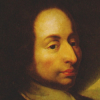
Blaise Pascal
Blaise Pascalwas a French mathematician, physicist, inventor, writer and Christian philosopher. He was a child prodigy who was educated by his father, a tax collector in Rouen. Pascal's earliest work was in the natural and applied sciences where he made important contributions to the study of fluids, and clarified the concepts of pressure and vacuum by generalising the work of Evangelista Torricelli. Pascal also wrote in defence of the scientific method...
NationalityFrench
ProfessionPhilosopher
Date of Birth19 June 1623
CityClermont-Ferrand, France
CountryFrance
Religion is so great a thing that it is right that those who will not take the trouble to seek it if it be obscure, should be deprived of it.
The majority is the best way, because it is visible, and has strength to make itself obeyed. Yet it is the opinion of the least able.
Look somewhere else for someone who can follow you in your researches about numbers. For my part, I confess that they are far beyond me, and I am competent only to admire them.
All men have happiness as their object: there is no exception. However different the means they employ, they all aim at the same end.
If there were only one religion, God would indeed be manifest.
What a difficult thing it is to ask someone's advice on a matter without coloring his judgment by the way in which we present our problem.
Force rules the world-not opinion; but it is opinion that makes use of force.
How shall one who is so weak in his childhood become really strong when he grows older? We only change our fancies.
We see neither justice nor injustice which does not change its nature with change in climate. Three degrees of latitude reverse all jurisprudence; a meridian decides the truth.
Must we kill to prevent there being any wicked? This is to make both parties wicked instead of one.
Law was once introduced without reason, and has become reasonable.
The arithmetical machine produces effects that approach nearer to thought than all the actions of animals. But it does nothing that would enable us to attribute will to it, as to the animals.
Either God exists or He doesn't. Either I believe in God or I don't. Of the four possibilities, only one is to my disadvantage. To avoid that possibility, I believe in God.
Everything that is incomprehensible does not cease to exist.