A. E. Housman
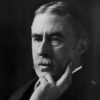
A. E. Housman
Alfred Edward Housman, usually known as A. E. Housman, was an English classical scholar and poet, best known to the general public for his cycle of poems A Shropshire Lad. Lyrical and almost epigrammatic in form, the poems wistfully evoke the dooms and disappointments of youth in the English countryside. Their beauty, simplicity and distinctive imagery appealed strongly to late Victorian and Edwardian taste, and to many early 20th-century English composers both before and after the First World War. Through...
NationalityEnglish
ProfessionPoet
Date of Birth26 March 1859
The laws of God, the laws of man, He may keep that will and can; Not I: let God and man decree Laws for themselves and not for me.
And then the clock collected in the tower / Its strength and struck.
Into my heart an air that kills / From yon far country blows: / What are those blue remembered hills, / What spires, what farms are those?
In my fourteenth year I had gone up to London for the first time, to see as many of the sights as could be got into a fortnight.
Cambridge has seen many strange sights. It has seen Wordsworth drunk, it has seen Porson sober. I am a greater scholar than Wordsworth and I am a greater poet than Porson. So I fall betwixt and between.
A neck God made for other use / Than strangling in a string.
Ensanguining the skies, How heavily it dies, Into the west away; Past touch and sight and sound, Not further to be found, How hopeless under ground, Falls the remorseful day
About the woodlands I will go / To see the cherry hung with snow.
Think no more; 'tis only thinking / Lays lads underground.
The young man feels his pockets / And wonders what's to pay.
The goal stands up, the keeper / Stands up to keep the goal.
And how am I to face the odds, Of man's bedevilment and God's? I, a stranger and afraid, In a world I never made
The Grizzly Bear is huge and wild; / He has devoured the infant child. / The infant child is not aware / He has been eaten by the bear.
And silence sounds no worse than cheers / After death has stopped the ears.