A. E. Housman
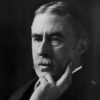
A. E. Housman
Alfred Edward Housman, usually known as A. E. Housman, was an English classical scholar and poet, best known to the general public for his cycle of poems A Shropshire Lad. Lyrical and almost epigrammatic in form, the poems wistfully evoke the dooms and disappointments of youth in the English countryside. Their beauty, simplicity and distinctive imagery appealed strongly to late Victorian and Edwardian taste, and to many early 20th-century English composers both before and after the First World War. Through...
NationalityEnglish
ProfessionPoet
Date of Birth26 March 1859
Life, to be sure, is nothing much to lose, But young men think it is, and we were young.
But men at whiles are sober And think by fits and starts. And if they think, they fasten Their hands upon their hearts
Nature, not content with denying him the ability to think, has endowed him with the ability to write.
Poems very seldom consist of poetry and nothing else; and pleasure can be derived also from their other ingredients. I am convinced that most readers, when they think they are admiring poetry, are deceived by inability to analyse their sensations, and that they are really admiring, not the poetry of the passage before them, but something else in it, which they like better than poetry.
I think that to transfuse emotion - not to transmit thought but to set up in the reader's sense a vibration corresponding to what was felt by the writer - is the peculiar function of poetry.
To be a textual critic requires aptitude for thinking and willingness to think; and though it also requires other things, those things are supplements and cannot be substitutes. Knowledge is good, method is good, but one thing beyond all others is necessary; and that is to have a head, not a pumpkin, on your shoulders and brains, not pudding, in your head.
Think no more; 'tis only thinking / Lays lads underground.
His folly has not fellow Beneath the blue of day That gives to man or woman His heart and soul away.
I could no more define poetry than a terrier can define a rat.
May will be fine next year as like as not: / Oh ay, but then we shall be twenty-four.
No change, though you lie under / The land you used to plough.
Pass me the can, lad; there's an end of May.
O Queen of air and darkness,I think 'tis truth you say,And I shall die to-morrow;But you will die to-day.
Little is the luck I've had, And oh, 'tis comfort small - To think that many another lad - Has had no luck at all