Swami Vivekananda
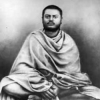
Swami Vivekananda
Swami VivekanandaBengali: , Shāmi Bibekānondo; 12 January 1863 – 4 July 1902), born Narendranath Datta, was an Indian Hindu monk, a chief disciple of the 19th-century Indian mystic Ramakrishna. He was a key figure in the introduction of the Indian philosophies of Vedanta and Yoga to the Western world and is credited with raising interfaith awareness, bringing Hinduism to the status of a major world religion during the late 19th century. He was a major force in the revival of Hinduism in...
NationalityIndian
ProfessionClergyman
Date of Birth12 January 1863
CountryIndia
For a time it seemed inevitable that the surging tide of agnosticism and materialism would sweep all before it. There were those who did not dare utter what they thought. Many thought the case hopeless and the cause of religion lost once and for ever. But the tide has turned and to the rescue has come - what? The study of comparative religions. By the study of different religions we find that in essence they are one.
Chârvâkas, a very ancient sect in India, were rank materialists.
Charity is great, but the moment you say it is all, you run the risk of running into materialism.
Man stands in materialism; you and I are materialists. Our talking about God and Spirit is good; but it is simply the vogue in our society to talk thus: we have learnt it parrot-like and repeat it.
Worship of society and popular opinion is idolatry.
We may worship a picture as God, but not God as the picture. God in the picture is right, but the picture as God is wrong. God in the image is perfectly right. There is no danger there. This is the real worship of God. But the image-God is a mere Pratika.
We are all born idolaters, and idolatry is good, because it is in the nature of man. Who can get beyond it? Only the perfect man, the God-man. The rest are all idolaters. So long as we see this universe before us, with its forms and shapes, we are all idolaters. This is a gigantic symbol we are worshipping. He who says he is the body is a born idolater.
Too much faith in personality has a tendency to produce weakness and idolatry, but intense love for the Guru makes rapid growth possible.
Those reformers who preach against image-worship, or what they denounce as idolatry - to them I say "Brothers, if you are fit to worship God-without-form discarding all external help, do so, but why do you condemn others who cannot do the same?"
This external worship of images has, however, been described in all our Shastras as the lowest of all the low forms of worship. But that does not mean that it is a wrong thing to do.
The world has not gone one step beyond idolatry yet.
The test of having ceased to be an idolater is: "When you say 'I', does the body come into your thought or not? If it does, then you are still a worshipper of idols."
The secret of image - worship is that you are trying to develop your vision of Divinity in one thing.
The idol is the expression of religion.