Siri Hustvedt
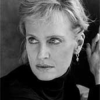
Siri Hustvedt
Siri Hustvedtis an American novelist and essayist. Hustvedt is the author of a book of poetry, six novels, two books of essays, and several works of non-fiction. Her books include: The Blindfold, The Enchantment of Lily Dahl, What I Loved, for which she is best known, A Plea for Eros, The Sorrows of an American, The Shaking Woman or A History of My Nerves, The Summer Without Men, Living, Thinking, Looking, and The Blazing World. What I Loved and The...
NationalityAmerican
ProfessionNovelist
Date of Birth19 February 1955
CityNorthfield, MN
CountryUnited States of America
I continue to write essays about art. The visual is always part of my work, and it gives me immense pleasure to make up the words of art and create them verbally rather than build them.
I am married to a writer, and this - writing - is an odd enterprise. It's something we both support very strongly.
The future is, of course, imaginary - an unreal place that I create from my expectations, which are made from my remembered experiences, especially repeated experiences.
The computer model will be replaced by an organic model, in which the brain-mind is embodied - part of a whole, dynamic, living organism: one driven by emotional forces, not only cognitive ones.
The history of fiction is about family - an inexhaustible subject for literature. We are creatures driven by emotions that are on high display in intimate relations - inside the family.
The idea that skiing might not be fun, might not be for everyone, had never occurred to me. Where I come from, the sport signified pleasure, nature, family happiness.
Crippled and crazy, we hobble toward the finish line, pen in hand.
Writing fiction is like remembering what never happened.
There is this assumption that much of what I write is about my life, and that simply is not true.
There is no reason we should expect young children to enter the nocturnal darkness of sleep and dreams without help.
Correlation is not cause, it is just a 'music of chance'.
We sometimes imagine we want what we don't really want.
There's a phenomenology of being sick, one that depends on temperament, personal history, and the culture which we live in.
I've often thought that one of us is what we imagine, that each of us normalizes the terrible strangeness of inner life with a variety of convenient fictions.