Ralph Waldo Emerson
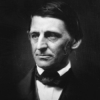
Ralph Waldo Emerson
Ralph Waldo Emerson, known professionally as Waldo Emerson, was an American essayist, lecturer, and poet who led the Transcendentalist movement of the mid-19th century. He was seen as a champion of individualism and a prescient critic of the countervailing pressures of society, and he disseminated his thoughts through dozens of published essays and more than 1,500 public lectures across the United States...
NationalityAmerican
ProfessionPoet
Date of Birth25 May 1803
CountryUnited States of America
We cannot overstate our debt to the Past, but the moment has the supreme claim.
An orator or author is never successful till he has learned to make his words smaller than his ideas.
Live, let live, and help live
There is a time when a man distinguishes the idea of felicity from the idea of wealth; it is the beginning of wisdom.
Get Health. No labor, effort nor exercise that can gain it must be grudged.
A foolish consistency is the hobgoblin of little minds, adored by little statesmen and philosophers and divines. With consistency a great soul has simply nothing to do. He may as well concern himself with his shadow on the wall. Speak what you think now in hard words and to-morrow speak what to-morrow thinks in hard words again, though it contradict every thing you said to-day.
Nothing is secure but life, transition, the energizing spirit.
I am thankful for small mercies. I compared notes with one of my friends who expect everything of the universe, and is disappointed when anything is less than the best, and I found that I begin at the other extreme, expecting nothing, and am always full of thanks for moderate good. . . . If we will take the good we find, . . . we shall have heaping measures. . . .
The mass of men worry themselves into nameless graves while here and there a great unselfish soul forgets himself into immortality.
No law can be sacred to me but that of my nature.
If there is any period one would desire to be born in, is it not the age of Revolution; when the old and the new stand side by side, and admit of being compared; when the energies of all men are searched by fear and by hope; when the historic glories of the old can be compensated by the rich possibilities of the new era?
The imitator dooms himself to hopeless mediocrity. The inventor did it because it was natural to him, and so in him it has a charm. In the imitator something else is natural, and he bereaves himself of his own beauty, to come short of another man's.
Truth is the summit of being; justice is the application of it to affairs....
Nature is too thin a screen; the glory of the omnipresent God bursts through everywhere