Michael Morpurgo
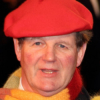
Michael Morpurgo
Michael Morpurgo, OBE, FRSL, FKC, DL is an English book author, poet, playwright, and librettist who is known best for children's novels such as War Horse. His work is noted for its "magical storytelling", for recurring themes such as the triumph of an outsider or survival, for characters' relationships with nature, and for vivid settings such as the Cornish coast or World War I. Morpurgo became the third British Children's Laureate, from 2003 to 2005...
NationalityEnglish
ProfessionChildren's Author
Date of Birth5 October 1943
CitySt Albans, England
Something I learn every time I stand in front of a bunch of children, I learn never, never to underestimate them or patronise them.
War continues to divide people, to change them forever, and I write about it both because I want people to understand the absolute futility of war, the 'pity of war' as Wilfred Owen called it.
The most important thing is to live an interesting life. Keep your eyes, ears and heart open. Talk to people and visit interesting places, and don't forget to ask questions. To be a writer you need to drink in the world around you so it's always there in your head.
The big relationships you make in your life are with those that you love and if things do go wrong then it's a source of great pain and that lasts.
It is really important that focusing on things such as spelling, punctuation, grammar and handwriting doesn't inhibit the creative flow. When I was at school there was a huge focus on copying and testing and it put me off words and stories for years.
Write because you love it and not because it is something that you think you should do. Always write about something or somebody you know about - something that you feel deeply and passionately about. Never try and force it.
I was never a great reader, but there were two stories I loved best: Kipling's 'The Elephant's Child' and 'The Jungle Book.' Deep down, I've always wanted to write a book about a wild child and an elephant.
To write something you have to feel it and know it, and that's not comfortable.
I really can't write fantasy. I cannot invent a world which does not exist. And I can't read fantasy either. As soon as I realise I'm reading a book that hasn't got its roots in a reality I can comprehend, I switch off.
Some writers - most, I suspect - write in isolation. I think I'd always found that quite difficult.
Strange questions are the more interesting ones. Children by and large don't try to trip you up... they want to find out how you do this funny thing that you do... if they've loved a story they love to know how it started.
If I'm serious, yes, I'd like to have done what Shakespeare did... to act and write. You learn so much from acting. One of our great writers, Alan Bennett, does both supremely well. When I write a story, I tend to speak it aloud as I'm writing it.
I become my characters, and then try to allow events in the story to take their own course. I try not to play God, but to let them work out their own destiny.
Genuinely good people are like that. The sun shines out of them. They warm you right through.