Mahatma Gandhi
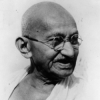
Mahatma Gandhi
Mohandas Karamchand Gandhi; 2 October 1869 – 30 January 1948) was the preeminent leader of the Indian independence movement in British-ruled India. Employing nonviolent civil disobedience, Gandhi led India to independence and inspired movements for civil rights and freedom across the world. The honorific Mahatma—applied to him first in 1914 in South Africa,—is now used worldwide. He is also called Bapuin India. In common parlance in India he is often called Gandhiji. He is unofficially called the Father of the Nation...
NationalityIndian
ProfessionCivil Rights Leader
Date of Birth2 October 1869
CityPortbandar, India
CountryIndia
The avowed policy of non-co-operation has been not to make political use of the disputes between labour and capital.
The Bhagavadgita is a gospel of non-co-operation between the forces of darkness and those of light.
The primary object of non-co-operation is nowhere stated to be paralysis of the Government. The primary object is self-purification.
It is nonviolent non-co-operation which evokes the highest spirit of self-sacrifice that will wean one from the error of one's ways.
When freedom is in jeopardy, non-co-operation may be a duty and prison may be a palace.
Non-co-operation enables us to show that in everything that matters we can be independent of the Government.
Non-co-operation in the political field is an extension of the doctrine as it is practised in the domestic field.
Non-co-operation intended to pave the way to real honourable and voluntary co-operation based on mutual respect and trust.
Non-co-operation in itself is unnatural, vicious and sinful.
Non-co-operation means nothing less than training in self-sacrifice.
Nonviolent non-co-operation with evil means co-operation with all that is good.
Non-co-operation is a nation's determination to improve.
Non-co-operation is an attempt to awaken the masses to a sense of their dignity and power.
Non-co-operation is protest against an unwitting and unwilling participation in evil.