Ludwig Wittgenstein
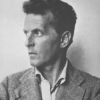
Ludwig Wittgenstein
Ludwig Josef Johann Wittgensteinwas an Austrian-British philosopher who worked primarily in logic, the philosophy of mathematics, the philosophy of mind, and the philosophy of language. From 1929 to 1947, Wittgenstein taught at the University of Cambridge. During his lifetime he published just one slim book, the 75-page Tractatus Logico-Philosophicus, one article, one book review and a children's dictionary. His voluminous manuscripts were edited and published posthumously. Philosophical Investigations appeared as a book in 1953, and has since come to be...
NationalityAustrian
ProfessionPhilosopher
Date of Birth26 April 1889
CityVienna, Austria
CountryAustria
Think of words as instruments characterized by their use, and then think of the use of a hammer, the use of a chisel, the use of a square, of a glue pot, and of the glue.
Philosophy, as we use the word, is a fight against the fascination which forms of expression exert upon us.
Whereof one cannot speak, thereof one must be silent.
It is truly strange how long it takes to get to know oneself. I am now sixty two years old, yet just one moment ago I realised that I absolutely love lightly toasted bread. Simultaneously, I also realised that I loathe bread when it is heavily toasted. For almost sixty years, and quite unconsciously, I have been experiencing inner joy or total despair at my relationship with grilled bread.
Freud 's fanciful pseudo-explanations (precisely because they are brilliant) perform a disservice. (Now any ass has these pictures available to use in "explaining" symptoms of an illness.
The world is made up of facts, not things.
The common behavior of mankind is the system of reference by means of which we interpret an unknown language.
We learn by rearranging what we know.
A man will be imprisoned in a room with a door that's unlocked and opens inwards; as long as it does not occur to him to pull rather than push.
There is a truth in Schopenhauer’s view that philosophy is an organism, and that a book on philosophy, with a beginning and end, is a sort of contradiction. ... In philosophy matters are not simple enough for us to say ‘Let’s get a rough idea’, for we do not know the country except by knowing the connections between the roads.
I think one of the things you and I have to learn is that we have to live without the consolation of belonging to a Church.... Of one thing I am certain. The religion of the future will have to be extremely ascetic, and by that I don't mean just going without food and drink.
Uttering a word is like striking a note on the keyboard of the imagination.
Not every religion has to have St. Augustine's attitude to sex. Why even in our culture marriages are celebrated in a church, everyone present knows what is going to happen that night, but that doesn't prevent it being a religious ceremony.
Ethics and aesthetics are one.