J. G. Ballard
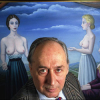
J. G. Ballard
James Graham "J. G." Ballard was an English novelist, short story writer, and essayist. He came to be associated with the New Wave of science fiction early in his career with apocalypticnovels such as The Wind from Nowhereand The Drowned World. In the late 1960s, Ballard produced a variety of experimental short stories, such as those collected in The Atrocity Exhibition, which drew comparisons with the work of postmodernist writers such as William S. Burroughs. In the mid 1970s, he...
NationalityBritish
ProfessionAuthor
Date of Birth18 November 1930
Electronic aids, particularly domestic computers, will help the inner migration, the opting out of reality. Reality is no longer going to be the stuff out there, but the stuff inside your head. It's going to be commercial and nasty at the same time.
I suspect that many of the great cultural shifts that prepare the way for political change are largely aesthetic
Actually, the suburbs are far more sinister places than most city dwellers imagine. Their very blandness forces the imagination into new areas. I mean, one's got to get up in the morning thinking of a deviant act, merely to make certain of one's freedom. It needn't be much; kicking the dog will do.
If their work is satisfying people don't need leisure in the old-fashioned sense. No one ever asks what Newton or Darwin did to relax, or how Bach spent his weekends. At Eden-Olympia work is the ultimate play, and play the ultimate work.
Yet she felt an impostor, and already the mask had begun to bite into her face.
The entertainment medium of film is particularly tuned to the present imaginations of people at large. A lot of fiction is intensely nostalgic.
A visit to Père Lachaise in Paris adds a year to one's life
Everywhere--all over Africa and South America . . . you see these suburbs springing up. They represent the optimum of what people want. There's a certain sort of logic leading towards these immaculate suburbs. And they're terrifying, because they are the death of the soul. . . . This is the prison this planet is being turned into.
Art exists because reality is neither real nor significant.
They thrived on the rapid turnover of acquaintances, the lack of involvement with others, and the total self-sufficiency of lives which, needing nothing, were never dissapointed.
Civilised life, you know, is based on a huge number of illusions in which we all collaborate willingly. The trouble is we forget after a while that they are illusions and we are deeply shocked when reality is torn down around us.
If I don't write, I begin to feel unsettled and uneasy, as I gather people do who are not allowed to dream.
Fiction is a branch of neurology
All you do is get on and start pedaling . . .