Gustave Flaubert
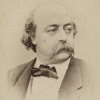
Gustave Flaubert
Gustave Flaubertwas an influential French novelist who was perhaps the leading exponent of literary realism in his country. He is known especially for his first published novel, Madame Bovary, for his Correspondence, and for his scrupulous devotion to his style and aesthetics. The celebrated short story writer Guy de Maupassant was a protégé of Flaubert...
NationalityFrench
ProfessionNovelist
Date of Birth12 December 1821
CityRouen, France
CountryFrance
I maintain that ideas are events. It is more difficult to make them interesting, I know, but if you fail the style is at fault.
One arrives at style only with atrocious effort, with fanatical and devoted stubbornness.
One never tires of what is well written, style is life! It is the very blood of thought!
Style is as much under the words as in the words. It is as much the soul as it is the flesh of a work.
There are neither good nor bad subjects. From the point of view of pure Art, you could almost establish it as an axiom that the subject is irrelevant, style itself being an absolute manner of seeing things.
Books are made not like children but like pyramids and they're just as useless! And they stay in the desert! Jackals piss at their foot and the bourgeois climb up on them.
Poetry is as exact a science as geometry
She (Madame Bovary) had that indefinable beauty that comes from happiness, enthusiasm, success - a beauty that is nothing more or less than a harmony of temperament and circumstances
The artist ought no more to appear in his work than God in nature.
The artist must be in his work like God in his Creation, invisible and all-powerful, so that he is felt everywhere but not seen.
Judge the goodness of a book by the energy of the punches it has given you. . . I believe the greatest characteristic of genius, is, above all, force.
Happy are they who don't doubt themselves and whose pens fly across the page. I myself hesitate, I falter, I become angry and fearful, my drive diminishes as my taste improves, and I brood more over an ill-suited word than I rejoice over a well-proportioned paragraph.
. . . human speech is like a cracked tin kettle, on which we hammer out tunes to make bears dance when we long to move the stars.
Human speech is like a cracked cauldron on which we bang out tunes that make bears dance, when what we want is to move the stars to pity