Flannery O'Connor
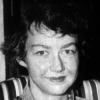
Flannery O'Connor
Mary Flannery O'Connorwas an American writer and essayist. An important voice in American literature, she wrote two novels and 32 short stories, as well as a number of reviews and commentaries. She was a Southern writer who often wrote in a Southern Gothic style and relied heavily on regional settings and grotesque characters. Her writing also reflected her own Roman Catholic faith and frequently examined questions of morality and ethics. Her posthumously-compiled Complete Stories won the 1972 U.S. National Book...
NationalityAmerican
ProfessionNovelist
Date of Birth25 March 1925
CitySavannah, GA
CountryUnited States of America
The type of mind that can understand good fiction is not necessarily the educated mind, but it is at all times the kind of mind that is willing to have its sense of mystery deepened by contact with reality, and its sense of reality deepened by contact with mystery.
Many of my ardent admirers would be roundly shocked and disturbed if they realized that everything I believe is thoroughly moral, thoroughly Catholic, and that it is these beliefs that give my work its chief characteristics.
Nothing needs to happen to a writer’s life after they are 20. By then they’ve experienced more than enough to last their creative life.
The Catholic writer, in so far as he has the mind of the Church, will feel life from the standpoint of the central Christian mystery; that it has, for all its horror, been found by God to be worth dying for.
Faith has to take in all the other possibilities it can.
But learned people can analyze for me why I fear hell and their implication is that there is no hell. But I believe in hell. Hell seems a great deal more feasible to my weak mind than heaven. No doubt because hell is a more earth-seeming thing. I can fancy the tortures of the damned but I cannot imagine the disembodied souls hanging in a crystal for all eternity praising God.
I am a writer because writing is the thing I do best.
I have found, in short, from reading my own writing, that my subject in fiction is the action of grace in territory largely held by the devil.
I am tired of reading reviews that call A Good Man brutal and sarcastic. The stories are hard but they are hard because there is nothing harder or less sentimental than Christian realism.... when I see these stories described as horror stories I am always amused because the reviewer always has hold of the wrong horror.
In most good stories, it is the character's personality that creates the action of the story. If you start with real personality, a real character, then something is bound to happen.
When you can state the theme of a story, when you can separate it from the story itself, then you can be sure the story is not a very good one.
Woman! Do you ever look inside? Do you ever look inside and see what you are not? God!
The only way, I think, to learn to write short stories is to write them, and then try to discover what you have done.
I find that most people know what a story is until they sit down to write one. Then they find themselves writing a sketch with an essay woven through it, or an essay with a sketch woven through it, or an editorial with a character in it, or a case history with a moral, or some other mongrel thing.