Flannery O'Connor
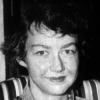
Flannery O'Connor
Mary Flannery O'Connorwas an American writer and essayist. An important voice in American literature, she wrote two novels and 32 short stories, as well as a number of reviews and commentaries. She was a Southern writer who often wrote in a Southern Gothic style and relied heavily on regional settings and grotesque characters. Her writing also reflected her own Roman Catholic faith and frequently examined questions of morality and ethics. Her posthumously-compiled Complete Stories won the 1972 U.S. National Book...
NationalityAmerican
ProfessionNovelist
Date of Birth25 March 1925
CitySavannah, GA
CountryUnited States of America
We lost our innocence in the Fall, and our turn to it is through the Redemption which was brought about by Christ's death and by our slow participation in it. Sentimentality is a skipping of this process in its concrete reality and an early arrival at a mock state of innocence, which strongly suggests its opposite.
The Bible was the only book he read. He didn't read it often but when he did he wore his mother's glasses. They tired his eyes so that after a short time he was always obliged to stop.
All my stories are about the action of grace on a character who is not very willing to support it, but most people think of these stories as hard, hopeless and brutal.
I write to discover what I know.
I come from a family where the only emotion respectable to show is irritation. In some this tendency produces hives, in others literature, in me both.
All human nature vigorously resists grace because grace changes us and the change is painful.
When she told a story, she rolled her eyes and waved her head and was very dramatic.
Fiction is about everything human and we are made out of dust, and if you scorn getting yourself dusty, then you shouldn't try to write fiction. It's not a grand enough job for you.
He knew something was going to happen and his entire system was waiting on it. He thought it was going to be one of the supreme moments in life but apart from that, he didn't have the vaguest notion what it might be. He pictured himself, after it was over, as an entirely new man, with an even better personality than he had now. He sat there for about fifteen minutes and nothing happened.
When you can assume that your audience holds the same beliefs you do, you can relax and use more normal means of talking to it; when you have to assume that it does not, then you have to make your vision apparent by shock -- to the hard of hearing you shout, and for the almost-blind you draw large and startling figures.
Art transcends its limitations only by staying within them.
I use the grotesque the way I do because people are deaf and dumb and need help to see and hear.
I have enough energy to write with and as that is all I have any business doing anyhow, I can with one eye squinted take it all as a blessing.
Most of us have learned to be dispassionate about evil, to look it in the face and find, as often as not, our own grinning reflections with which we do not argue, but good is another matter. Few have stared at that long enough to accept that its face too is grotesque, that in us the good is something under construction. The modes of evil usually receive worthy expression. The modes of good have to be satisfied with a cliche or a smoothing down that will soften their real look.