Charles Darwin
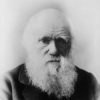
Charles Darwin
Charles Robert Darwin, FRS FRGS FLS FZSwas an English naturalist and geologist, best known for his contributions to the science of evolution. He established that all species of life have descended over time from common ancestors, and in a joint publication with Alfred Russel Wallace introduced his scientific theory that this branching pattern of evolution resulted from a process that he called natural selection, in which the struggle for existence has a similar effect to the artificial selection involved in...
ProfessionScientist
Date of Birth12 February 1809
CityShrewsbury, England
Free will is to mind what chance is to matter.
Mere chance ... alone would never account for so habitual and large an amount of difference as that between varieties of the same species.
It is impossible to concieve of this immense and wonderful universe as the result of blind chance or necessity.
The impossibility of conceiving that this grand and wondrous universe, with our conscious selves, arose through chance, seems to me the chief argument for the existence of God.
...he who remains passive when over-whelmed with grief loses his best chance of recovering his elasticity of mind.
The belief in God has often been advanced as not only the greatest but the most complete of all the distinctions between man and the lower animals. It is, however, impossible to maintain that this belief is instinctive in man. The idea of a universal and beneficent creator does not seem to arise in the mind of man until he has been elevated by long, continued culture.
In however complex a manner this feeling may have originated, as it is one of high importance to all those animals which aid and defend one another, it will have been increased through natural selection; for those communities, which included the greatest number of the most sympathetic members, would flourish best, and rear the greatest number of offspring.
...I have always maintained that, excepting fools, men did not differ much in intellect, only in zeal and hard work; and I still think there is an eminently important difference.
There is something referred to as the 'Darwin industry' in science.
A man who dares to waste one hour of life has not discovered the value of life
If it could be demonstrated that any complex organ existed which could not possibly have been formed by numerous, successive, slight modifications, my theory would absolutely break down".
It is generally admitted that with woman the powers of intuition, of rapid perception and perhaps of imitation, are more strongly marked than in man: but some, at least, of these faculties are characteristic of the lower races, and therefore of a pas
There is Grandeur in this view of life,
Why then is not every geological formation and every stratum full of such intermediate links? Geology assuredly does not reveal any such fine graduated organic chain; and this, perhaps, is the most obvious and serious objection which can be urged against the theory.