Carl Jung
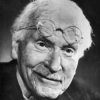
Carl Jung
Carl Gustav Jungwas a Swiss psychiatrist and psychotherapist who founded analytical psychology. His work has been influential not only in psychiatry but also in philosophy, anthropology, archaeology, literature, and religious studies. He was a prolific writer, though many of his works were not published until after his death...
NationalitySwiss
ProfessionScientist
Date of Birth26 July 1875
CityKesswil, Switzerland
CountrySwitzerland
What is essential in a work of art is that it should rise far above the realm of personal life and speak to the spirit and heart of the poet as man to the spirit and heart of mankind.
Language, in its origin and essence, is simply a system of signs or symbols that denote real occurrences or their echo in the human soul.
One could say, with a little exaggeration, that the persona is that which in reality one is not, but which oneself as well as others think one is.
As one grows older one must try not to work oneself to death unnecessarily. At least that's how it is with me... I can scarcely keep pace and must watch out that the creative forces do not chase me around the universe in a wallop.
We can keep from a child all knowledge of earlier myths, but we cannot take from him the need for mythology.
The greatest and most important problems of life are all in a certain sense insoluble. They can never be solved, but only outgrown. This 'outgrowing', as I formerly called it, on further experience was seen to consist in a new level of consciousness. Some higher or wider interest arose on the person's horizon, and through this widening of view, the insoluble problem lost its urgency. It was not solved logically in its own terms, but faded out when confronted with a new and stronger life-tendency.
I can still recall vividly how Freud said to me, "My dear Jung, promise me never to abandon the sexual theory. That is the most essential thing of all. You see, we must make a dogma of it, an unshakable bulwark" ... In some astonishment I asked him, "A bulwark-against what?" To which he replied, "Against the black tide of mud"-and here he hesitated for a moment, then added of occultism.
My own understanding is the sole treasure I possess, and the greatest. Though infinitely small and fragile in comparison with the powers of darkness, it is still a light, my only light.
The problem of synchronicity has puzzled me for a long time, ever since the middle twenties, when I was investigating the phenomena of the collective unconscious and kept on coming across connections which I simply could not explain as chance groupings or "runs." What I found were "coincidences" which were connected so meaningfully that their "chance" concurrence would represent a degree of improbability that would have to be expressed by an astronomical figure.
Science is the tool of the Western mind and with it more doors can be opened than with bare hands.
Magic is the science of the jungle.
A [wo]man who is unconscious of [her/]himself acts in a blind, instinctive way and is in addition fooled by all the illusions that arise when he sees everything that he is not conscious of in himself coming to meet him from outside as projections upon his neighbour.
Only by discovering alchemy have I clearly understood that the Unconscious is a process and that ego's rapport with the Unconscious and its contents initiate an evolution, more precisely, a real metamorphosis of the psyche.
Life is crazy and meaningful at once.