Carl Jung
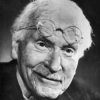
Carl Jung
Carl Gustav Jungwas a Swiss psychiatrist and psychotherapist who founded analytical psychology. His work has been influential not only in psychiatry but also in philosophy, anthropology, archaeology, literature, and religious studies. He was a prolific writer, though many of his works were not published until after his death...
NationalitySwiss
ProfessionScientist
Date of Birth26 July 1875
CityKesswil, Switzerland
CountrySwitzerland
The conscious mind allows itself to be trained like a parrot, but the unconscious does not—which is why St. Augustine thanked God for not making him responsible for his dreams.
We carry our past with us, to wit, the primitive and inferior man with his desires and emotions, and it is only with an enormous effort that we can detach ourselves from this burden. If it comes to a neurosis, we invariably have to deal with a considerably intensified shadow. And if such a person wants to be cured it is necessary to find a way in which his conscious personality and his shadow can live together.
The upheaval of our world and the upheaval of our consciousness are one and the same.
The world of gods and spirits is truly 'nothing but' the collective unconscious inside me.
The unexpected and the incredible belong in this world. Only then is life whole.
How else could it have occurred to man to divide the cosmos, on the analogy of day and night, summer and winter, into a bright day-world and a dark night-world peopled with fabulous monsters, unless he had the prototype of such a division in himself, in the polarity between the conscious and the invisible and unknowable unconscious?
Hurry is not of the devil; hurry is the devil.
The creative process, so far as we are able to follow it at all, consists in the unconscious activation of an archetypal image and elaborating and shaping the image into the finished work. By giving it shape, the artist translates it into the language of the present and so makes it possible for us to find our way back to the deepest springs of life.
The primordial image, or archetype, is a figure--be it a daemon, a human being, or a process--that constantly recurs in the course of history and appears wherever creative fantasy is freely expressed. Essentially, therefore, it is a mythological figure. . . . In each of these images there is a little piece of human psychology and human fate, a remnant of the joys and sorrows that have been repeated countless times in our ancestral history. . . .
Wherever an inferiority complex exists, there is a good reason for it.
The unsatisfied yearning of the artist reaches back to the primordial image in the unconscious which is best fitted to compensate the inadequacy and one-sidedness of the present.
Individualization does not shut one out from the world, but gathers the world to oneself.
The God-image in man was not destroyed by the Fall but was only damaged and corrupted ('deformed'), and can be restored through God's grace. The scope of the integration is suggested by the descent of Christ's soul to hell, its work of redemption embracing even the dead. The psychological equivalent of this is the integration of the collective unconscious which forms an essential part of the individuation process.
Error is just as important a condition of life's progress as truth