Blaise Pascal
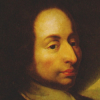
Blaise Pascal
Blaise Pascalwas a French mathematician, physicist, inventor, writer and Christian philosopher. He was a child prodigy who was educated by his father, a tax collector in Rouen. Pascal's earliest work was in the natural and applied sciences where he made important contributions to the study of fluids, and clarified the concepts of pressure and vacuum by generalising the work of Evangelista Torricelli. Pascal also wrote in defence of the scientific method...
NationalityFrench
ProfessionPhilosopher
Date of Birth19 June 1623
CityClermont-Ferrand, France
CountryFrance
Christian piety annihilates the egoism of the heart; worldly politeness veils and represses it.
The greatness of man is great in that he knows himself to be wretched. A tree does not know itself to be wretched.
From whence comes it that a cripple in body does not irritate us, and that a crippled mind enrages us? It is because a cripple sees that we go right, and a distorted mind says that it is we who go astray. But for that we should have more pity and less rage.
To find recreation in amusements is not happiness; for this joy springs from alien and extrinsic sources, and is therefore dependent upon and subject to interruption by a thousand accidents, which may minister inevitable affliction.
We never live, but we hope to live; and as we are always arranging to be happy, it must be that we never are so.
Desire and force between them are responsible for all our actions; desire causes our voluntary acts, force our involuntary.
We are only falsehood, duplicity, contradiction; we both conceal and disguise ourselves from ourselves.
Do you wish people to speak well of you? Then do not speak at all yourself. [Fr., Voulez-vous qu'on croie du bien de vous? N'en dites point.]
We know the truth, not only be the reason, but also be the heart.
Truly it is an evil to be full of faults; but it is a still greater evil to be full of them and to be unwilling to recognize them, since that is to add the further fault of a voluntary illusion.
We view things not only from different sides, but with different eyes; we have no wish to find them alike.
Those we call the ancients were really new in everything.
When we would show any one that he is mistaken, our best course is to observe on what side he considers the subject,--for his view of if is generally right on this side,--and admit to him that he is right so far. He will be satisfied with this acknowledgment, that he was not wrong in his judgment, but only inadvertent in not looking at the whole case.
If man should commence by studying himself, he would see how impossible it is to go further.