Blaise Pascal
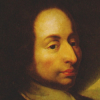
Blaise Pascal
Blaise Pascalwas a French mathematician, physicist, inventor, writer and Christian philosopher. He was a child prodigy who was educated by his father, a tax collector in Rouen. Pascal's earliest work was in the natural and applied sciences where he made important contributions to the study of fluids, and clarified the concepts of pressure and vacuum by generalising the work of Evangelista Torricelli. Pascal also wrote in defence of the scientific method...
NationalityFrench
ProfessionPhilosopher
Date of Birth19 June 1623
CityClermont-Ferrand, France
CountryFrance
True eloquence makes light of eloquence. True morality makes light of morality.
Do they think that they have given us great pleasure by telling us that they hold our soul to be no more than wind or smoke, and saying it moreover in tones of pride and satisfaction? Is this then something to be said gaily? Is it not on the contrary something to be said sadly, as being the saddest thing in the world?
All men naturally hate each other. We have used concupiscence as best we can to make it serve the common good, but this is mere sham and a false image of charity, for essentially it is just hate.
Description of man: dependence, longing for independence, need.
To be mistaken in believing that the Christian religion is true is no great loss to anyone; but how dreadful to be mistaken in believing it to be false!
I would have far more fear of being mistaken, and of finding that the Christian religion was true, than of not being mistaken in believing it true.
Man is neither angel nor beast.
All men seek happiness. There are no exceptions.... This is the motive of every act of every man, including those who go and hang themselves.
Man governs himself more by impulse than reason
Justice is as much a matter of fashion as charm is.
It is not shameful for a man to succumb to pain and it is shameful to succumb to pleasure.
Reason's last step is to acknowledge that there are infinitely many things beyond it.
It is an appalling thing to feel all one possesses drain away.
The art of subversion, of revolution, is to dislodge established customs by probing down to their origins in order to show how they lack authority and justice.