Billy Collins
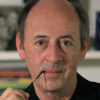
Billy Collins
William James "Billy" Collinsis an American poet, appointed as Poet Laureate of the United States from 2001 to 2003. He is a Distinguished Professor at Lehman College of the City University of New York and is the Senior Distinguished Fellow of the Winter Park Institute, Florida. Collins was recognized as a Literary Lion of the New York Public Libraryand selected as the New York State Poet for 2004 through 2006. He isa teacher in the MFA program at Stony Brook...
NationalityAmerican
ProfessionPoet
Date of Birth22 March 1941
CityNew York City, NY
CountryUnited States of America
I find a lot of poetry very disappointing, but I do have poets that I go back to. One book of poetry that I'd like to mention is 'The Exchange' by Sophie Cabot Black. Her poems are difficult without being too difficult.
I don't want to sound like an aesthete, but one has to be true to the art. And that means being true to the tradition of the art but also being true to your own artistic vision.
I don't think I've ever written a poem whose intention was just to be funny. I've written poems that start out funny and often shift into something more serious.
I did try to write stories in college because I was interested in writing, and I was interested in the sound of language, but I was just no good at narrative and at fiction.
I am increasingly attracted to restricting possibility in the poem by inflicting a form upon yourself. Once you impose some formal pattern on yourself, then the poem is pushing back. I think good poems are often the result of that kind of wrestling with the form.
I am a nonparticipant of social media. I'm not much attracted to anything that involves the willing forfeiture of privacy and the foregrounding of insignificance.
For most Americans, poetry plays no role in their everyday lives. But also for most Americans, contemporary painting or jazz or sculpture play no role either. I'm not saying poetry is singled out as a special thing to ignore.
Emily Dickinson seems rather tame because she pretty much uses the same meter every time. It's called 'common meter.' It's a line of four beats that's followed by a line of three beats.
Attempts to put my poems to music have had disastrous results in all cases. And the poem, if it's written with the ear, already has been set to its own verbal music as it was composed.
A lot of my poems either have historical sequences or other kinds of chronological grids where I'm locating myself in time. I like to feel oriented, and I like to orient the reader at the beginning of a poem.
A lasting marriage, they say, is one where the two reach for different sections of the Sunday paper. Me, I go right for the obituaries, just like those very elderly characters in Muriel Spark's spooky novel, 'Memento Mori.'
When you put a book together and arrange it, there's a lot of anxiety and turmoil about what order the poems should be in.
When I write, I'm not trying to be funny. It's the way I look at the world.
When I became poet laureate, I was in a slightly uncomfortable position because I think a lot of poetry isn't worth reading.