Bertrand Russell
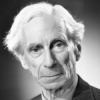
Bertrand Russell
Bertrand Arthur William Russell, 3rd Earl Russell, OM, FRSwas a British philosopher, logician, mathematician, historian, writer, social critic, political activist and Nobel laureate. At various points in his life he considered himself a liberal, a socialist, and a pacifist, but he also admitted that he had "never been any of these things, in any profound sense". He was born in Monmouthshire into one of the most prominent aristocratic families in the United Kingdom...
NationalityBritish
ProfessionPhilosopher
Date of Birth18 May 1872
Men have physical needs, and they have emotions. While physical needs are unsatisfied, they take first place; but when they are satisfied, emotions unconnected with them become important in deciding whether a man is to be happy or unhappy.
Unhappy business men, I am convinced, would increase their happiness more by walking six miles every day than by any conceivable change of philosophy.
The man who is unhappy will, as a rule, adopt an unhappy creed, while the man who is happy will adopt a happy creed; each may attribute his happiness or unhappiness to his beliefs, while the real causation is the other way round.
What makes a free thinker is not his beliefs, but the way in which he holds them. If he holds them because his elders told him they were true when he was young, or if he holds them because if he did not he would be unhappy, his thought is not free; but if he holds them because, after careful thought, he finds a balance in their favor, then his thought is free, however odd his conclusions may seem.
What is wanted is not the will to believe, but the wish to find out, which is its exact opposite.
Cruelty is in theory a perfectly adequate ground for divorce, but it may be interpreted so as to become absurd
Boredom is a vital problem for the moralist, since at least half the sins of mankind are caused by the fear of it.
...The universe is just there, and that's all.
A large proportion of the human race, it is true, is obliged to work so hard in obtaining the necessaries that little energy is left over for the other purposes; but those whose livelihood is assured do not, on that account, cease to be active
It is true that if we ever did stop to think about the cosmos we might find it uncomfortable. The sun may grow cold or blow up; the earth may lose its atmosphere and become uninhabitable
It is undesirable to believe a proposition when there is no reason whatsoever for supposing it to be true
It's a waste of energy to be angry with a man who behaves badly, just as it is to be angry with a car that won't go
Everybody has had at some time nightmares of falling, which seem to suggest an origin in the lives of our arboreal ancestors, though this perhaps is fanciful
Marx's father became a Christian when Marx was a little boy, and some, at least, of the dogmas he must have then accepted seem to have born fruit in his son's psychology.