Bertrand Russell
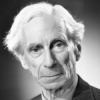
Bertrand Russell
Bertrand Arthur William Russell, 3rd Earl Russell, OM, FRSwas a British philosopher, logician, mathematician, historian, writer, social critic, political activist and Nobel laureate. At various points in his life he considered himself a liberal, a socialist, and a pacifist, but he also admitted that he had "never been any of these things, in any profound sense". He was born in Monmouthshire into one of the most prominent aristocratic families in the United Kingdom...
NationalityBritish
ProfessionPhilosopher
Date of Birth18 May 1872
There is no logical impossibility in the hypothesis that the world sprang into being five minutes ago, exactly as it then was, with a population that "remembered" a wholly unreal past. There is no logically necessary connection between events at different times; therefore nothing that is happening now or will happen in the future can disprove the hypothesis that the world began five minutes ago.
There is as much difference between a collection of mentally free citizens and a community molded by modern methods of propaganda as there is between a heap of raw materials and a battleship.
The infliction of cruelty with a good conscience is a delight to moralists - that is why they invented hell.
[There has been] every kind of cruelty practiced upon all sorts of people in the name of religion.
My conclusion is that there is no reason to believe any of the dogmas of traditional theology and, further, that there is no reason to wish that they were true. Man, in so far as he is not subject to natural forces, is free to work out his own destiny. The responsibility is his, and so is the opportunity.
Unless one is taught what to do with success after getting it, achievement of it must inevitably leave him prey to boredom.
To a mind of sufficient intellectual power, the whole of mathematics would appear trivial, as trivial as the statement that a four-footed animal is an animal.
The fact that all Mathematics is Symbolic Logic is one of the greatest discoveries of our age; and when this fact has been established, the remainder of the principles of mathematics consists of the analysis of Symbolic Logic itself.
Remote from human passions, remote even from the pitiful facts of nature, the generations have gradually created an ordered cosmos [mathematics], where pure thought can dwell in its natural home...
Only mathematics and mathematical logic can say as little as the physicist means to say.
But it is just this characteristic of simplicity in the laws of nature hitherto discovered which it would be fallacious to generalize, for it is obvious that simplicity has been a part cause of their discovery, and can, therefore, give no ground for the supposition that other undiscovered laws are equally simple.
Arithmetic must be discovered in just the same sense in which Columbus discovered the West Indies, and we no more create numbers than he created the Indians.
There are infinite possibilities of error, and more cranks take up fashionable untruths than unfashionable truths.
Of these austerer virtues the love of truth is the chief, and in mathematics, more than elsewhere, the love of truth may find encouragement for waning faith. Every great study is not only an end in itself, but also a means of creating and sustaining a lofty habit of mind; and this purpose should be kept always in view throughout the teaching and learning of mathematics.