Bertrand Russell
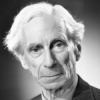
Bertrand Russell
Bertrand Arthur William Russell, 3rd Earl Russell, OM, FRSwas a British philosopher, logician, mathematician, historian, writer, social critic, political activist and Nobel laureate. At various points in his life he considered himself a liberal, a socialist, and a pacifist, but he also admitted that he had "never been any of these things, in any profound sense". He was born in Monmouthshire into one of the most prominent aristocratic families in the United Kingdom...
NationalityBritish
ProfessionPhilosopher
Date of Birth18 May 1872
Cruelty is, in theory, a perfectly adequate ground for divorce, but it may be interpreted so as to become absurd.
One of the main causes of trouble in the world is dogmatic and fanatical belief in some doctrine for which there is no adequate evidence
I do not believe that science per se is an adequate source of happiness, nor do I think that my own scientific outlook has contributed very greatly to my own happiness, which I attribute to defecating twice a day with unfailing regularity.
Collective wisdom, alas, is no adequate substitute for the intelligence of individuals. Individuals who opposed received opinions have been the source of all progress, both moral and intellectual. They have been unpopular, as was natural.
There is no nonsense so errant that it cannot be made the creed of the vast majority by adequate governmental action.
Cruelty is in theory a perfectly adequate ground for divorce, but it may be interpreted so as to become absurd
To save the world requires faith and courage: faith in reason, and courage to proclaim what reason shows to be true
Many people would sooner die than think; in fact, they do so.
The man who can centre his thoughts and hopes upon something transcending self can find a certain peace in the ordinary troubles of life, which is impossible to the pure egoist.
Those who have never known the deep intimacy and the intense companionship of mutual love have missed the best thing that life has to give.
What is wanted is not the will to believe, but the wish to find out, which is its exact opposite.
Boredom is a vital problem for the moralist, since at least half the sins of mankind are caused by the fear of it.
We have in fact, two kinds of morality, side by side: one that we preach, but do not practice, and another that we practice, but seldom preach.
With equal passion I have sought knowledge. I have wished to understand the hearts of men. I have wished to know why the stars shine. And I have tried to apprehend the Pythagorean power by which number holds sway about the flux. A little of this, but not much, I have achieved.