Bertrand Russell
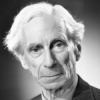
Bertrand Russell
Bertrand Arthur William Russell, 3rd Earl Russell, OM, FRSwas a British philosopher, logician, mathematician, historian, writer, social critic, political activist and Nobel laureate. At various points in his life he considered himself a liberal, a socialist, and a pacifist, but he also admitted that he had "never been any of these things, in any profound sense". He was born in Monmouthshire into one of the most prominent aristocratic families in the United Kingdom...
NationalityBritish
ProfessionPhilosopher
Date of Birth18 May 1872
In the higher walks of politics the same sort of thing occurs. The statesman who has gradually concentrated all power within himself ... may have had anything but a public motive... The phrases which are customary on the platform and in the Party Press have gradually come to him to seem to express truths, and he mistakes the rhetoric of partisanship for a genuine analysis of motives... He retires from the world after the world has retired from him.
Many orthodox people speak as though it were the business of sceptics to disprove received dogmas rather than of dogmatists to prove them. This is, of course, a mistake.
Dr. Arnold . . . the admired reformer of public schools, came across some cranks who thought it a mistake to flog boys. Anyone reading his outburst of furious indignation against this opinion will be forced to the conclusion that he enjoyed inflicting floggings.
Thinking you know when in fact you don't is a fatal mistake, to which we are all prone
Aristotle could have avoided the mistake of thinking that women have fewer teeth than men, by the simple device of asking Mrs. Aristotle to keep her mouth open while he counted.
In considering irregular appearances, there are certain very natural mistakes which must be avoided.
The practice of inhibiting impulses, which is to a great extent necessary to civilized life, makes mistakes easier, by preventing experience of the actions to which a desire would otherwise lead, and by often causing the inhibited impulses themselves to be unnoticed or quickly forgotten.
To save the world requires faith and courage: faith in reason, and courage to proclaim what reason shows to be true
Many people would sooner die than think; in fact, they do so.
The man who can centre his thoughts and hopes upon something transcending self can find a certain peace in the ordinary troubles of life, which is impossible to the pure egoist.
Those who have never known the deep intimacy and the intense companionship of mutual love have missed the best thing that life has to give.
What is wanted is not the will to believe, but the wish to find out, which is its exact opposite.
Boredom is a vital problem for the moralist, since at least half the sins of mankind are caused by the fear of it.
We have in fact, two kinds of morality, side by side: one that we preach, but do not practice, and another that we practice, but seldom preach.