Bertrand Russell
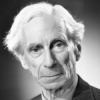
Bertrand Russell
Bertrand Arthur William Russell, 3rd Earl Russell, OM, FRSwas a British philosopher, logician, mathematician, historian, writer, social critic, political activist and Nobel laureate. At various points in his life he considered himself a liberal, a socialist, and a pacifist, but he also admitted that he had "never been any of these things, in any profound sense". He was born in Monmouthshire into one of the most prominent aristocratic families in the United Kingdom...
NationalityBritish
ProfessionPhilosopher
Date of Birth18 May 1872
The really useful education is that which follows the direction of the child's own instinctive interests, supplying knowledge for which it is seeking, not dry, detailed information wholly out of relation to its spontaneous desires.
In the daily lives of most men and women, fear plays a greater part than hope: they are more filled with the thought of the possessions that others may take from them, than of the joy that they might create in their own lives and in the lives with which they come in contact. It is not so that life should be lived.
Love is a slippery eel that bites like hell
Each act of cruelty is eternally a part of the universe; nothing that happens later can make that act good rather than bad, or can confer perfection on the whole of which it is a part.
Very few men can be genuinely happy in a life involving continual self-assertion against the skepticism of the mass of mankind, unless they can shut themselves up in a coterie and forget the cold outer world. The man of science has no need of a coterie, since he is thought well of by everybody except his colleagues. The artist, on the contrary, is in the painful situation of having to choose between being despised and being despicable.
I suppose the advocates of unreason think that there is a better chance of profitably deceiving the populace if they keep it in a state of effervescence.
The Ten Commandments should be headed like an examination paper: No more than six to be attempted.
One is always a little afraid of love, but above all, one is afraid of pain or causing pain.
Citizens as conceived by governments are persons who admire the status quo and are prepared to exert themselves for its preservation. Oddly enough, while all governments aim at producing men of this type to the exclusion of all other types, their heroes in the past are of exactly the sort that they aim at preventing in the present. Americans admire George Washington and Jefferson, but imprison those who share their political opinions.
Half the useful work in the world consists of combating the harmful work.
The late F. W. H. Myers used to tell how he asked a man at a dinner table what he thought would happen to him when he died. The man tried to ignore the question, but, on being pressed, replied: "Oh well, I suppose I shall inherit eternal bliss, but I wish you wouldn't talk about such unpleasant subjects."
Artists are on the average less happy than men of science.
While I am as convinced a Socialist as the most ardent Marxian, I do not regard Socialism as a gospel of proletarian revenge, nor even, primarily, as a means of securing economic justice. I regard it primarily as an adjustment to machine production demanded by considerations of common sense, and calculated to increase the happiness, not only of proletarians, but of all except a tiny minority of the human race.
Perhaps the best hope for the future of mankind is that ways will be found of increasing the scope and intensity of sympathy.