Bertrand Russell
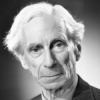
Bertrand Russell
Bertrand Arthur William Russell, 3rd Earl Russell, OM, FRSwas a British philosopher, logician, mathematician, historian, writer, social critic, political activist and Nobel laureate. At various points in his life he considered himself a liberal, a socialist, and a pacifist, but he also admitted that he had "never been any of these things, in any profound sense". He was born in Monmouthshire into one of the most prominent aristocratic families in the United Kingdom...
NationalityBritish
ProfessionPhilosopher
Date of Birth18 May 1872
Freedom in education has many aspects. There is first of all freedom to learn or not to learn. Then there is freedom as to what to learn. And in later education there is freedom of opinion.
So in everything: power lies with those who control finance, not with those who know the matter upon which the money is to be spent. Thus, the holders of power are, in general, ignorant and malevolent, and the less they exercise their power the better.
None of our beliefs are quite true; all have at least a penumbra of vagueness and error.
Stupidity and unconscious bias often work more damage than venality.
The root of the matter is a very simple and old fashioned thing... love or compassion. If you feel this, you have a motive for existence, a guide for action, a reason for courage, an imperative necessity for intellectual honesty.
We do not like to be robbed of an enemy; we want someone to hate when we suffer. It is so depressing to think that we suffer because we are fools; yet, taking mankind in the mass, that is the truth.
It is a natural propensity to attribute misfortune to someone's malignity.
Moral indignation is one of the most harmful forces in the modern world, the more so as it can always be diverted to sinister uses by those who control propaganda.
Human nature being what it is, people will insist upon getting some pleasure out of life.
Official morality has always been oppressive and negative: it has said "thou shalt not," and has not troubled to investigate the effect of activities not forbidden by the code.
To speak seriously: the standards of "goodness" which are generally recognized by public opinion are not those which are calculated to make the world a happier place. This is due to a variety of causes, of which the chief is tradition, and the next most powerful is the unjust power of dominant classes.
There is an element of the busybody in our conception of virtue: unless a man makes himself a nuisance to a great many people, we do not think he can be an exceptionally good man.
Understanding human nature must be the basis of any real improvement in human life. Science has done wonders in mastering the laws of the physical world, but our own nature is much less understood, as yet, than the nature of stars and electrons. When science learns to understand human nature, it will be able to bring a happiness into our lives which machines and the physical sciences have failed to create.
Machines have altered our way of life, but not our instincts. Consequently, there is maladjustment.