Bertrand Russell
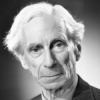
Bertrand Russell
Bertrand Arthur William Russell, 3rd Earl Russell, OM, FRSwas a British philosopher, logician, mathematician, historian, writer, social critic, political activist and Nobel laureate. At various points in his life he considered himself a liberal, a socialist, and a pacifist, but he also admitted that he had "never been any of these things, in any profound sense". He was born in Monmouthshire into one of the most prominent aristocratic families in the United Kingdom...
NationalityBritish
ProfessionPhilosopher
Date of Birth18 May 1872
Envy ... is one form of a vice, partly moral, partly intellectual, which consists in seeing things never in themselves but only in their relations.
Education, which was at first made universal in order that all might be able to read and write, has been found capable of serving quite other purposes. By instilling nonsense it unifies populations and generates collective enthusiasm.
More cranks take up unfashionable errors than unfashionable truths.
The military superiority of Europe to Asia is not an eternal law of nature, as we are tempted to think, and our superiority in civilization is a mere delusion.
It is impossible to read in America, except on a train, because of the telephone. Everyone has a telephone, and it rings all day and most of the night.
A man's acts are partly determined by spontaneous impulse, partly by the conscious and unconscious effects of the various groups to which he belongs.
My sad conviction is that people can only agree about what they're not really interested in.
Can a society in which thought and technique are scientific persist for a long period, as, for example, ancient Egypt persisted, or does it necessarily contain within itself forces which must bring either decay or explosion?
Nine-tenths of the appeal of pornography is due to the indecent feelings concerning sex which moralists inculcate in the young; the other tenth is physiological, and will occur in one way or another whatever the state of the law may be.
We may often do as we please - but we cannot please as we please.
If everything must have a cause, then God must have a cause. If there can be anything without a cause, it may just as well be the world as God, so that there cannot be any validity in that argument... The idea that things must have a beginning is really due to the poverty of our imagination.
At the age of eleven, I began Euclid, with my brother as my tutor. ... I had not imagined that there was anything so delicious in the world. After I had learned the fifth proposition, my brother told me that it was generally considered difficult, but I had found no difficulty whatsoever. This was the first time it had dawned on me that I might have some intelligence.
Philosophers, for the most part, are constitutionally timid, and dislike the unexpected. Few of them would be genuinely happy as pirates or burglars. Accordingly they invent systems which make the future calculable, at least in its main outlines.
Undoubtedly the desire for food has been and still is one of the main causes of political events.