Bertrand Russell
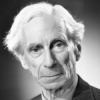
Bertrand Russell
Bertrand Arthur William Russell, 3rd Earl Russell, OM, FRSwas a British philosopher, logician, mathematician, historian, writer, social critic, political activist and Nobel laureate. At various points in his life he considered himself a liberal, a socialist, and a pacifist, but he also admitted that he had "never been any of these things, in any profound sense". He was born in Monmouthshire into one of the most prominent aristocratic families in the United Kingdom...
NationalityBritish
ProfessionPhilosopher
Date of Birth18 May 1872
I believe in using words, not fists. I believe in my outrage knowing people are living in boxes on the street. I believe in honesty. I believe in a good time. I believe in good food. I believe in sex.
Mathematics may be defined as the subject in which we never know what we are talking about, nor whether what we are saying is true.
It seems to me a fundamental dishonesty, and a fundamental treachery to intellectual integrity to hold a belief because you think it's useful and not because you think it's true.
All movements go too far.
Is there any knowledge in the world which is so certain that no reasonable man could doubt it?
If all our happiness is bound up entirely in our personal circumstances it is difficult not to demand of life more than it has to give.
The widespread interest in gossip is inspired, not by a love of knowledge but by malice: no one gossips about other people's secret virtues, but only about their secret vices. Accordingly most gossip is untrue, but care is taken not to verify it. Our neighbour's sins, like the consolations of religion, are so agreeable that we do not stop to scrutinise the evidence closely.
Our great democracies still tend to think that a stupid man is more likely to be honest than a clever man.
I am myself a dissenter from all known religions, and I hope that every kind of religious belief will die out.
The observer, when he seems to himself to be observing a stone, is really, if physics is to be believed, observing the effects of the stone upon himself.
I resolved from the beginning of my quest that I would not be misled by sentiment and desire into beliefs for which there was no good evidence.
It is preoccupation with possessions, more than anything else, that prevents us from living freely and nobly.
These illustrations suggest four general maxims[...]. The first is: remember that your motives are not always as altruistic as they seem to yourself. The second is: don't over-estimate your own merits. The third is: don't expect others to take as much interest in you as you do yourself. And the fourth is: don't imagine that most people give enough thought to you to have any special desire to persecute you.
It's coexistence or no existence.