Bertrand Russell
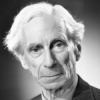
Bertrand Russell
Bertrand Arthur William Russell, 3rd Earl Russell, OM, FRSwas a British philosopher, logician, mathematician, historian, writer, social critic, political activist and Nobel laureate. At various points in his life he considered himself a liberal, a socialist, and a pacifist, but he also admitted that he had "never been any of these things, in any profound sense". He was born in Monmouthshire into one of the most prominent aristocratic families in the United Kingdom...
NationalityBritish
ProfessionPhilosopher
Date of Birth18 May 1872
I think we ought always to entertain our opinions with some measure of doubt. I shouldn't wish people dogmatically to believe any philosophy, not even mine.
Aristotle maintained that women have fewer teeth than men; although he was twice married, it never occurred to him to verify this statement by examining his wives' mouths.
To teach how to live without certainty and yet without being paralysed by hesitation is perhaps the chief thing that philosophy, in our age, can do for those who study it.
Many a man will have the courage to die gallantly, but will not have the courage to say, or even to think, that the cause for which he is asked to die is an unworthy one.
A process which led from the amoeba to man appeared to the philosophers to be obviously a progress though whether the amoeba would agree with this opinion is not known.
Obscenity is whatever happens to shock some elderly and ignorant magistrate.
Order, unity, and continuity are human inventions, just as truly as catalogues and encyclopedias.
Reason is a harmonising, controlling force rather than a creative one.
To acquire immunity to eloquence is of the utmost importance to the citizens of a democracy.
Man needs, for his happiness, not only the enjoyment of this or that, but hope and enterprise and change.
Man is a credulous animal, and must believe something; in the absence of good grounds for belief, he will be satisfied with bad ones.
Freedom in general may be defined as the absence of obstacles to the realization of desires.
I remain convinced that obstinate addiction to ordinary language in our private thoughts is one of the main obstacles to progress in philosophy.
Italy, and the spring and first love all together should suffice to make the gloomiest person happy.