Bertrand Russell
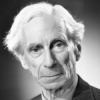
Bertrand Russell
Bertrand Arthur William Russell, 3rd Earl Russell, OM, FRSwas a British philosopher, logician, mathematician, historian, writer, social critic, political activist and Nobel laureate. At various points in his life he considered himself a liberal, a socialist, and a pacifist, but he also admitted that he had "never been any of these things, in any profound sense". He was born in Monmouthshire into one of the most prominent aristocratic families in the United Kingdom...
NationalityBritish
ProfessionPhilosopher
Date of Birth18 May 1872
The fact that a belief has a good moral effect upon a man is no evidence whatsoever in favor of its truth.
Good nature is, of all moral qualities, the one that the world needs most, and good nature is the result of ease and security, not of a life of arduous struggle. Modern methods of production have given us the possibility of ease and security for all; we have chosen, instead, to have overwork for some and starvation for the others. Hitherto we have continued to be as energetic as we were before there were machines; in this we have been foolish, but there is no reason to go on being foolish for ever.
We all have a tendency to think that the world must conform to our prejudices. The opposite view involves some effort of thought, and most people would die sooner than think in fact they do so.
I think people who are unhappy are always proud of being so, and therefore do not like to be told that there is nothing grand about their unhappiness. A man who is melancholy because lack of exercise has upset his liver always believes that it is the loss of God, or the menace of Bolshevism, or some such dignified cause that makes him sad. When you tell people that happiness is a simple matter, they get annoyed with you.
All's well that ends well; which is the epitaph I should put on my tombstone if I were the last man left alive.
A logical theory may be tested by its capacity for dealing with puzzles, and it is a wholesome plan, in thinking about logic, to stock the mind with as many puzzles as possible, since these serve much the same purpose as is served by experiments in physical science.
The "social contract," in the only sense in which it is not completely mythical, is a contract among conquerors, which loses its raison d'être if they are deprived of the benefits of conquest.
If we spent half an hour every day in silent immobility, I am convinced that we should conduct all our affairs, personal, national, and international, far more sanely than we do at present.
Of all evils of war the greatest is the purely spiritual evil: the hatred, the injustice, the repudiation of truth, the artificial conflict.
A great many worries can be diminished by realizing the unimportance of the matter which is causing anxiety.
But as the work proceeded I was continually reminded of the fable about the elephant and the tortoise. Having constructed an elephant upon which the mathematical world could rest, I found the elephant tottering, and proceeded to construct a tortoise to keep the elephant from falling. But the tortoise was not more secure than the elephant, and after some twenty years of very arduous toil, I came to the conclusion that there was nothing more that I could do in the way of making mathematical knowledge indubitable.
Mysticism is, in essence, little more than a certain intensity and depth of feeling in regard to what is believed about the universe.
Too little liberty brings stagnation, and too much brings chaos.
Scientific societies are as yet in their infancy. It is to be expected that advances in physiology and psychology will give governments much more control over individual mentality than they now have even in totalitarian countries. Fitche laid it down that education should aim at destroying free will, so that, after pupils have left school, they shall be incapable, throughout the rest of their lives, of thinking or acting otherwise than as their schoolmasters would have wished.