Baruch Spinoza
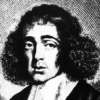
Baruch Spinoza
Baruch Spinozawas a Dutch philosopher of Sephardi/Portuguese origin. By laying the groundwork for the 18th-century Enlightenment and modern biblical criticism, including modern conceptions of the self and the universe, he came to be considered one of the great rationalists of 17th-century philosophy...
NationalityDutch
ProfessionPhilosopher
Date of Birth24 November 1632
men serving
Men are especially intolerant of serving and being ruled by, their equals.
ideas effort mind
To comprehend an idea, a person must simultaneously accept it as true. Conscious analysis - which, depending on the idea, may occur almost immediately or with considerable effort - allows the mind to reject what it intially accepted as fact.
order anxiety honor
He whose honor depends on the opinion of the mob must day by day strive with the greatest anxiety, act and scheme in order to retain his reputation. For the mob is varied and inconsistent, and therefore if a reputation is not carefully preserved it dies quickly.
action glory educated
According as each has been educated, so he repents of or glories in his actions.
determination self self-determination
Freedom is self-determination.
reality perfection
Reality and perfection are synonymous.
mind body limits
Whatever increases, decreases, limits or extends the body's power of action, increases decreases, limits, or extends the mind's power of action. And whatever increases, decreases, limits, or extends the mind's power of action, also increases, decreases, limits, or extends the body's power of action.
philosophy found knows
I do not presume that I have found the best philosophy, I know that I understand the true philosophy.
men slavery barbarism
If slavery, barbarism and desolation are to be called peace, men can have no worse misfortune.
mind free-will determinism
In the mind there is no absolute or free will.
order fixed preserves
Yet nature cannot be contravened, but preserves a fixed and immutable order.
past mind body
The mind can only imagine anything, or remember what is past, while the body endures.
memories forget forget-it
The more intelligible a thing is, the more easily it is retained in the memory, and counterwise, the less intelligible it is, the more easily we forget it.
All is One (Nature, God)