Barbara Ehrenreich
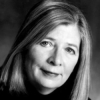
Barbara Ehrenreich
Barbara Ehrenreichis an American author and political activist who describes herself as "a myth buster by trade", and has been called "a veteran muckraker" by The New Yorker. During the 1980s and early 1990s she was a prominent figure in the Democratic Socialists of America. She is a widely read and award-winning columnist and essayist, and author of 21 books. Ehrenreich is perhaps best known for her 2001 book Nickel and Dimed: OnGetting By in America. A memoir of Ehrenreich's...
NationalityAmerican
ProfessionWriter
Date of Birth26 August 1941
CountryUnited States of America
I know that the last thing a book wants is to just sit around unread, serving as an element of interior decorating. So when I have people over, all they have to do is glance at my books, and I implore them to take a few home with them. If I am really ambitious, I pack books into boxes and donate them to prisons.
Every time a bank swoops down to snatch up a home, it should be met with a crowd of jeering, obstructive neighbors. And although this may be point 4.5, how about organizing a mass refusal to pay back student loans?
For the millions of us who live glued to computer keyboards at work and TV monitors at home, food may be more than entertainment. It may be the only sensual experience left.
Whether you work outside the home or not, never tell them [your children] that being a mommy is your 'job.' Being a mommy is a relationship, not a profession.
To be homeless in America is to live like a fugitive. The destitute are our own native-born "illegals."
If men were equally at risk from this condition -- if they knew their bellies might swell as if they were suffering from end-stage cirrhosis, that they would have to go nearly a year without a stiff drink, a cigarette, or even an aspirin, that they would be subject to fainting spells and unable to fight their way onto commuter trains -- then I am sure that pregnancy would be classified as a sexually transmitted disease and abortions would be no more controversial than emergency appendectomies.
I have a Ph.D. in cell biology. And that's really manual labor. I mean, experimental science, you do it with your hands. So it's very different. You're out there in a lab, cleaning test tubes, and it just wasn't that fascinating.
When the Somalians were merely another hungry third world people, we sent them guns. Now that they are falling down dead from starvation, we send them troops. Some may see in this a tidy metaphor for the entire relationship between north and south. But it would make a whole lot more sense nutritionally -- as well as providing infinitely more vivid viewing -- if the Somalians could be persuaded to eat the troops.
There's a lot of cruelty going on all the time, and I'm not just talking about inter-human cruelty. I'm talking about whole species becoming extinct, asteroids hitting planets, black holes gobbling up stars.
It was a very big principle in my upbringing that you should respect everybody's work. The street sweeper. Everybody. You should never look down on anybody for their work.
I routinely oscillate between exultation and despair. Maybe at the end of the day I feel pretty good about what I've written, but the next morning I see that it's crap. Then I start again - make a new outline, do some more research, try to rethink the whole question.
In 1993, 89 of the 'Fortune' top 100 companies were administering the Myers-Briggs test to their employees. The philosophy behind personality tests is that they don't want you to be in the wrong kind of job. The tests have been completely exposed as nonsense.
We - we spend a lot of time, scholarly time, thinking about love and sex, but very little about the - the kind of joy that can take over a crowd of people or a group of people, in festivity, in ecstatic ritual of some kind, in celebration.
I'm interested in what bonds people together. You know, what brings us together in good ways? And there's not a lot known about that.