Barbara Ehrenreich
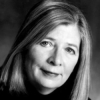
Barbara Ehrenreich
Barbara Ehrenreichis an American author and political activist who describes herself as "a myth buster by trade", and has been called "a veteran muckraker" by The New Yorker. During the 1980s and early 1990s she was a prominent figure in the Democratic Socialists of America. She is a widely read and award-winning columnist and essayist, and author of 21 books. Ehrenreich is perhaps best known for her 2001 book Nickel and Dimed: OnGetting By in America. A memoir of Ehrenreich's...
NationalityAmerican
ProfessionWriter
Date of Birth26 August 1941
CountryUnited States of America
The Civil Rights Movement, it wasn't just a couple of, you know, superstars like Martin Luther King. It was thousands and thousands - millions, I should say - of people taking risks, becoming leaders in their community.
When someone works for less pay than she can live on -- when, for example, she goes hungry so that you can eat more cheaply and conveniently -- than she has made a great sacrifice for you, she has made of a gift of some part of her abilities, her health, and her life.
we are reaching the point, if we have not passed it already, where the largest public housing program in America will be our penitentiary system.
My parents were atheists, strong atheists. I never got the answer 'God.'
My death is incidental, and I worry very much about my loved ones and, you know, would like to make it as easy as possible for them. Or wish I could will away whatever, you know, the sadness they will feel when I die. But for me, nothing. The world goes on.
If there is something I am arguing, it is a critique of science. Science has consistently denied the existence of consciousness other than human. Only in the last 20 years do we have acknowledgement of animal feeling or culture or experience.
I haven't seen much socially redeeming about religion. I'm an atheist. I don't here want to get into the Hitchens- or Dawkins-style attack on religion. I was raised on that. It's boring.
I haven't read enough of the Bible. You know, I'm saving the Bible for if I ever get imprisoned, and the only reading material was the Bible.
We love television because television brings us a world in which television does not exist.
When I was 17, I had an experience that I later learned could be called a 'mystical experience.' It was almost violent. No faces, voices, nothing like that. It is like the world burst and flamed into life all around me. That is not a great image, but it is as good as I will ever do.
When I was 13, I had these episodes where I could just see the world without any words attached to it, without any associations. It was a little bit spooky. A lot of people might have even thought it was pathological. I thought it was interesting.
I became a student of the history of religion. I am fascinated by how religions often center on mystical experience, and in the Old Testament tradition you find flames, the burning bush.
I first started asking big questions when I was 12, and by big questions, I mean, 'Why are we here? What is this business? We're alive for a few short decades and then poof, we're out of here.'
I didn't want to be an author; I wanted to be a scientist. Not that I didn't love literature, but I couldn't distinguish it from reading, and reading was already my default activity, almost like breathing.