William James
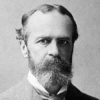
William James
William Jameswas an American philosopher and psychologist who was also trained as a physician. The first educator to offer a psychology course in the United States, James was one of the leading thinkers of the late nineteenth century and is believed by many to be one of the most influential philosophers the United States has ever produced, while others have labelled him the "Father of American psychology". Along with Charles Sanders Peirce and John Dewey, he is considered to be...
NationalityAmerican
ProfessionPhilosopher
Date of Birth11 January 1842
CityNew York City, NY
CountryUnited States of America
A great idea goes through three stages on its way to acceptance: 1) it is dismissed as nonsense, 2) it is acknowledged as true, but insignificant, 3) finally, it is seen to be important, but not really anything new.
Individuality is founded in feeling
If we remembered everything, we should on most occasions be as ill off as if we remembered nothing. It would take us as long to recall a space of time as it took the original time to elapse, and we should never get ahead with our thinking. All recollected times undergo, accordingly, what M. Ribot calls foreshortening; and this foreshortening is due to the omission of an enormous number of facts which filled them.
In youth we may have an absolutely new experience, subjective or objective, every hour of the day. Apprehension is vivid, retentiveness strong, and our recollections of that time, like those in a time spent in rapid and interesting travel, are of something intricate, multitudinous, and long-drawn-out. But as each passing year converts some of this experience into automatic routine which we hardly note at all, the days and the weeks smooth themselves out in recollection to a contentless unit, and the years grow hollow and collapse.
The sway of alcohol over mankind is unquestionably due to its power to stimulate the mystical faculties of human nature, usually crushed to earth by the cold facts and dry criticisms of the sober hour.
You may not get everything you dream about, but you will never get anything you don't dream about.
Our acts of voluntary attending, as brief and fitful as they are, are nevertheless momentous and critical, determining us, as they do, to higher or lower destinies.
The gist of the matter is this: Every impression that comes in from without, be it a sentence which we hear, an object of vision, or an effluvium which assails our nose, no sooner enters our consciousness than it is drafted off in some determinate direction or other, making connection with the other materials already there, and finally producing what we call our reaction. The particular connections it strikes into are determined by our past experiences and the 'associations' of the present sort of impression with them.
The mind is made up by what it feeds upon.
Need and struggle are what excite and inspire us; our hour of triumph is what brings the void.
Don't preach too much to your pupils or abound in good talk in the abstract. Lie in wait rather for the practical opportunities, be prompt to seize those as they pass, and thus at one operation get your pupils both to think, to feel, and to do.
Success plus Self-esteem equals Pretensions.
Our belief at the beginning of a doubtful undertaking is the one thing that assures the successful outcome of any venture.
Philosophy is at once the most sublime and the most trivial of human pursuits.