William Harvey
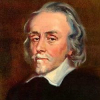
William Harvey
William Harveywas an English physician who made seminal contributions in anatomy and physiology. He was the first known to describe completely and in detail the systemic circulation and properties of blood being pumped to the brain and body by the heart, though earlier writers, such as Realdo Colombo, Miguel Servetin: Christianismi Restitutio, Paris, 1546, and Jacques Dubois, had provided precursors of the theory. In 1973 the William Harvey Hospital was constructed in the town of Ashford, several miles from his...
NationalityEnglish
ProfessionScientist
Date of Birth1 April 1578
When in many dissections, carried out as opportunity offered upon living animals, I first addressed my mind to seeing how I could discover the function and offices of the heart's movement in animals through the use of my own eyes instead of through the books and writings of others, I kept finding the matter so truly hard and beset with difficulties that I all but thought, with Fracastoro, that the heart's movement had been understood by God alone.
Very many maintain that all we know is still infinitely less than all that still remains unknown; nor do philosophers pin their faith to others' precepts in such wise that they lose their liberty, and cease to give credence to the conclusions of their proper senses. Neither do they swear such fealty to their mistress Antiquity that they openly, and in sight of all, deny and desert their friend Truth.
Nature is a volume of which God is the author.
Only by understanding the wisdom of natural foods and their effects on the body, shall we attain mastery of disease and pain, which shall enable us to relieve the burden of mankind.
For the concept of a circuit of the blood does not destroy, but rather advances traditional medicine.
And so I conclude that blood lives and is nourished of itself and in no way depends on any other part of the body as being prior to it or more excellent... So that from this we may perceive the causes not only of life in general... but also of longer or shorter life, of sleeping and waking, of skill, of strength and so forth.
I have often wondered and even laughed at those who fancied that everything had been so consummately and absolutely investigated by an Aristotle or a Galen or some other mighty name, that nothing could by any possibility be added to their knowledge.
The heart is the household divinity which, discharging its function, nourishes, cherishes, quickens the whole body, and is indeed the foundation of life, the source of all action.
Moderate labor of the body conduces to the preservation of health, and cares many initial diseases.
Civilization is only a series of victories against nature.
I profess to learn and to teach anatomy not from books but from dissections, not from the tenets of Philosophers but from the fabric of Nature.
All we know is still infinitely less than all that remains unknown.