William Ernest Hocking
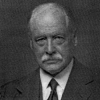
William Ernest Hocking
William Ernest Hockingwas an American idealist philosopher at Harvard University. He continued the work of his philosophical teacher Josiah Royce in revising idealism to integrate and fit into empiricism, naturalism and pragmatism. He said that metaphysics has to make inductions from experience: "that which does not work is not true." His major field of study was the philosophy of religion, but his 22 books included discussions of philosophy and human rights, world politics, freedom of the press, the philosophical psychology...
NationalityAmerican
ProfessionPhilosopher
CountryUnited States of America
William Ernest Hocking quotes about
Pure community is a matter of no interest to any will; but a community which pursues a common good is of supreme interest to all wills; and what we have here said is that whatever the nature of that common good ... it must contain the development of individual powers, as a prior condition for all other goods.
The only thing that can set aside a law as wrong is a better law, or an idea of a better law. And the only thing that an give a law the quality of better or worse is the concrete result which it promotes or fails to promote.
It is right, or absolute right, that an individual should develop the powers that are in him. He may be said to have a "natural right" to become what he is capable of becoming. This is his only natural right.
Without good-will, no man has any presumptive right, except the right or opportunity to change his will, so long as there is hope of it.
Nothing is more evident, I venture to think, as a result of two or three thousand years of social philosophizing, than that society must live and thrive by way of the native impulses of individual human beings.
Principle III:;: Presumptive rights are the conditions under which individual powers normally develop.
Principle II:;: The presumptions of the law are creative presumptions:;: they are aimed at conditions to be brought about, and only for that reason ignore conditions which exist.
Principle I:;: Legal rights are presumptive rights.
Art is life, plus caprice.
Mr. Rihani, we met once a thousand years ago and we may not meet again for another thousand years.
Wherever moral ambition exists, there right exists. And moral ambition itself must be presumed present in subconsciousness, even when the conscious self seems to reject it, so long as society has resources for bringing it into action; in much the same way that the life-saver presumes life to exist in the drowned man until he has exhausted his resources for recovering respiration.