Wilhelm Ostwald
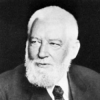
Wilhelm Ostwald
Friedrich Wilhelm Ostwaldwas a Russian-German chemist. He received the Nobel Prize in Chemistry in 1909 for his work on catalysis, chemical equilibria and reaction velocities. Ostwald, Jacobus Henricus van 't Hoff, and Svante Arrhenius are usually credited with being the modern founders of the field of physical chemistry...
NationalityGerman
ProfessionScientist
Date of Birth2 September 1853
CountryGermany
tired long lost
The worst manifestations of exhaustion were successfully cured by a long period of rest but it was immediately apparent to me that I had lost once and for all my former capacity for carrying out experimental work until physically tired.
growth patterns aging
The individual organs follow the same pattern as the whole organism, i.e. they have their period of growth, of stationary, maximum activity and then of aging decline.
views water substance
The well-known fact that the form of a specific substance, e.g. water, and hence its properties can alter without a change in composition was disposed of by the formal view that a physical, not a chemical, process was involved.
views development creation
The development of a rational view of the nature of catalysis was thus absolutely dependent on the creation of the concept of the rate of chemical reaction.
typical reactions cases
Nowadays, however, we recognize that simultaneously with the typical case of a chemical reaction a typical case of catalytic effect had been studied which constitutes a limiting case.
church authority higher
In other words, the Church acknowledges Science as the higher authority.
aging periods certain
In specific circumstances the period of aging decline can set in earlier in a particular organ than in the organism as a whole which, in a certain general or theoretical sense, is left a cripple or invalid.
firsts biology form
We know from biology that new forms of organisms simulate their primitive form as closely as possible at first, even though obliged to exist under changed internal and external conditions.