Washington Irving
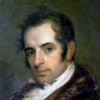
Washington Irving
Washington Irvingwas an American short story writer, essayist, biographer, historian, and diplomat of the early 19th century. He is best known for his short stories "Rip Van Winkle"and "The Legend of Sleepy Hollow", both of which appear in his book The Sketch Book of Geoffrey Crayon, Gent. His historical works include biographies of George Washington, Oliver Goldsmith and Muhammad, and several histories of 15th-century Spain dealing with subjects such as Christopher Columbus, the Moors and the Alhambra. Irving served as...
NationalityAmerican
ProfessionNovelist
Date of Birth3 April 1783
CityNew York City, NY
CountryUnited States of America
There's nothing like being in fashion. A man that has once got his character up for a wit is always sure of a laugh, say what he may. He may utter as much nonsense as he pleases, and all will pass current. No one stops to question the coin of a rich man; but a poor devil cannot pass off either a joke or a guinea without its being examined on both sides. Wit and coin are always doubted with a threadbare coat.
My father died and left me his blessing and his business. His blessing brought no money into my pocket, and as to his business, it soon deserted me, for I was busy writing poetry, and could not attend to law, and my clients, though they had great respect for my talents, had no faith in a poetical attorney.
I have never found, in anything outside of the four walls of my study, an enjoyment equal to sitting at my writing desk with a clean page, a new theme, and a mind awake.
Language gradually varies, and with it fade away the writings of authors who have flourished their allotted time; otherwise, the creative powers of genius would overstock the world, and the mind would be completely bewildered in the endless mazes of literature.
As the vine which has long twined its graceful foliage about the oak and been lifted by it into sunshine, will, when the hardy plant is rifted by the thunderbolt, cling round it with its caressing tendrils and bind up its shattered boughs, so is it beautifully ordered by Providence that woman, who is the mere dependent and ornament of man in his happier hours, should be his stay and solace when smitten with sudden calamity, winding herself into the rugged recesses of his nature, tenderly supporting the drooping head, and binding up the broken heart.
Wit, after all, is a mighty tart, pungent ingredient, and much too acid for some stomachs; but honest good humor is the oil and wine of a merry meeting.
In civilized life, where the happiness, and indeed almost the existence, of man depends so much upon the opinion of his fellow-men, he is constantly acting a studied part. The bold and peculiar traits of native character are refined away or softened down by the levelling influence of what is termed good-breeding, and he practises so many petty deceptions and affects so many generous sentiments for the purposes of popularity that it is difficult to distinguish his real from his artificial character.
True love will not brook reserve; it feels undervalued and outraged, when even the sorrows of those it loves are concealed from it.
There rise authors now and then, who seem proof against the mutability of language, because they have rooted themselves in the unchanging principles of human nature. They are like gigantic trees that we sometimes see on the banks of a stream; which, by their vast and deep roots, penetrating through the mere surface, and laying hold on the very foundations of the earth, preserve the soil around them from being swept away by the ever-flowing current, and hold up many a neighboring plant, and perhaps worthless weed, to perpetuity.
I could not but smile to think in what out-of-the-way corners genius produces her bantlings! And the Muses, those capricious dames, who, forsooth, so often refuse to visit palaces, and deny a single smile to votaries in splendid studies, and gilded drawing-rooms--what holes and burrows will they frequent to lavish their favors on some ragged disciple!
He that drinks beer, thinks beer.
The almighty dollar, that great object of universal devotion throughout our land, seems to have no genuine devotees in these peculiar villages.
What earnest worker, with hand and brain for the benefit of his fellowmen, could desire a more pleasing recognition of his usefulness than the monument of a tree, ever growing, ever blooming, and ever bearing wholesome fruit?
Every desire bears its death in its very gratification. Curiosity languishes under repeated stimulants, and novelties cease to excite and surprise, until at length we cannot wonder even at a miracle.