Walt Whitman
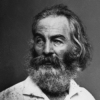
Walt Whitman
Walter "Walt" Whitmanwas an American poet, essayist, and journalist. A humanist, he was a part of the transition between transcendentalism and realism, incorporating both views in his works. Whitman is among the most influential poets in the American canon, often called the father of free verse. His work was very controversial in its time, particularly his poetry collection Leaves of Grass, which was described as obscene for its overt sexuality...
NationalityAmerican
ProfessionPoet
Date of Birth31 May 1819
CountryUnited States of America
Here the frailest leaves of me and yet my strongest lasting, Here I shade and hide my thoughts, I myself do not expose them, And yet they expose me more than all my other poems
There is no week nor day nor hour when tyranny may not enter upon this country, if the people lose their roughness and spirit of defiance.
The proof of a poet is that his country absorbs him as affectionately as he has absorbed it.
I do not ask the wounded person how he feels, I myself become the wounded person.
I sound my barbaric yawp over the rooftops of the world.
A child said What is the grass? fetching it to me with full hands; How could I answer the child? I do not know what it is any more than he.
O Captain! My Captain! our fearful trip is done.
The moon gives you light, and the bugles and the drums give you music, and my heart, O my soldiers, my veterans, my heart gives you love.
The habit of giving only enhances the desire to give.
Do I contradict myself? Very well, then I contradict myself, I am large, I contain multitudes.
Did you, too, O friend, suppose democracy was only for elections, for politics, and for a party name? I say democracy is only of use there that it may pass on and come to its flower and fruit in manners, in the highest forms of interaction between people, and their beliefs - in religion, literature, colleges and schools- democracy in all public and private life...
I accept reality and dare not question it.
Thought Of equality- as if it harm'd me, giving others the same chances and rights as myself- as if it were not indispensable to my own rights that others possess the same.
As soon as histories are properly told there is no more need of romances.