Thomas Mann
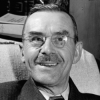
Thomas Mann
Paul Thomas Mannwas a German novelist, short story writer, social critic, philanthropist, essayist, and the 1929 Nobel Prize in Literature laureate. His highly symbolic and ironic epic novels and novellas are noted for their insight into the psychology of the artist and the intellectual. His analysis and critique of the European and German soul used modernized German and Biblical stories, as well as the ideas of Goethe, Nietzsche and Schopenhauer...
NationalityGerman
ProfessionNovelist
Date of Birth6 June 1875
CityLubeck, Germany
CountryGermany
He took in the squeaky music, the vulgar and pining melodies, because passion immobilizes good taste and seriously considers what soberly would be thought of as funny and to be resented.
What pleases the public is lively and vivid delineation which makes no demands on the intellect; but passionate and absolutist youth can only be enthralled by a problem.
Even in a personal sense, after all, art is an intensified life. By art one is more deeply satisfied and more rapidly used up. It engraves on the countenance of its servant the traces of imaginary and intellectual adventures, and even if he has outwardly existed in cloistral tranquility, it leads in the long term to overfastidiousness, over-refinement, nervous fatigue and overstimulation, such as can seldom result from a life of the most extravagant passions and pleasures.
Isn't it grand, isn't it good, that language has only one word for everything we associate with love - from utter sanctity to the most fleshly lust? The result is perfect clarity in ambiguity, for love cannot be disembodied even in its most sanctified forms, nor is it without sanctity even at its most fleshly. Love is always simply itself, both as a subtle affirmation of life and as the highest passion; love is our sympathy with organic life.
Democracy is timelessly human, and timelessness always implies a certain amount of potential youthfulness.
For the beautiful word begets the beautiful deed.
An art whose medium is language will always show a high degree of critical creativeness, for speech is itself a critique of life: it names, it characterizes, it passes judgment, in that it creates.
It is a strange fact that freedom and equality, the two basic ideas of democracy, are to some extent contradictory. Logically considered, freedom and equality are mutually exclusive, just as society and the individual are mutually exclusive.
Disease makes men more physical, it leaves them nothing but body.
Bush's partisan style of governance has reinforced it.
Separation would likely do more harm than good for congressional Republicans. They need to try to rehabilitate the president's political standing, which will have a large bearing on the size of their seat loss in 2006.
Republicans who had doubts about elements of the president's tax and spending programs were willing to play ball in the interests of advancing the Republican cause. Now that the president is in serious political trouble, they're more inclined to make some independent judgments.
I think was Harry Truman who said, 'If you want to live like a Republican, vote Democratic,' ... The idea that somehow a Democratic majority is harmful for the economy strikes me as fanciful. It's financial fiction.
If those train wrecks and if that gamesmanship is being driven by broad political forces, narrow margins in the House and the Senate, divided party government, difficult decisions that have to be made, genuine differences that exist, mobilization of interest groups if all of those things are true, you are going to find vehicles to have those fights, whether you have a two-year budget cycle or not.