Thomas Mann
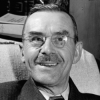
Thomas Mann
Paul Thomas Mannwas a German novelist, short story writer, social critic, philanthropist, essayist, and the 1929 Nobel Prize in Literature laureate. His highly symbolic and ironic epic novels and novellas are noted for their insight into the psychology of the artist and the intellectual. His analysis and critique of the European and German soul used modernized German and Biblical stories, as well as the ideas of Goethe, Nietzsche and Schopenhauer...
NationalityGerman
ProfessionNovelist
Date of Birth6 June 1875
CityLubeck, Germany
CountryGermany
Yes, they are carnal, both of them, love and death, and therein lies their terror and their great magic!
There were profound reasons for his attachment to the sea: he loved it because as a hardworking artist he needed rest, needed to escape from the demanding complexity of phenomena and lie hidden on the bosom of the simple and tremendous; because of a forbidden longing deep within him that ran quite contrary to his life's task and was for that very reason seductive, a longing for the unarticulated and immeasurable, for eternity, for nothingness. To rest in the arms of perfection is the desire of any man intent upon creating excellence; and is not nothingness a form of perfection?
A great truth is a truth whose opposite is also a truth.
A harmful truth is better than a useful lie.
Democracy is timelessly human, and timelessness always implies a certain amount of potential youthfulness.
For the beautiful word begets the beautiful deed.
An art whose medium is language will always show a high degree of critical creativeness, for speech is itself a critique of life: it names, it characterizes, it passes judgment, in that it creates.
It is a strange fact that freedom and equality, the two basic ideas of democracy, are to some extent contradictory. Logically considered, freedom and equality are mutually exclusive, just as society and the individual are mutually exclusive.
Disease makes men more physical, it leaves them nothing but body.
Bush's partisan style of governance has reinforced it.
Separation would likely do more harm than good for congressional Republicans. They need to try to rehabilitate the president's political standing, which will have a large bearing on the size of their seat loss in 2006.
Republicans who had doubts about elements of the president's tax and spending programs were willing to play ball in the interests of advancing the Republican cause. Now that the president is in serious political trouble, they're more inclined to make some independent judgments.
I think was Harry Truman who said, 'If you want to live like a Republican, vote Democratic,' ... The idea that somehow a Democratic majority is harmful for the economy strikes me as fanciful. It's financial fiction.
If those train wrecks and if that gamesmanship is being driven by broad political forces, narrow margins in the House and the Senate, divided party government, difficult decisions that have to be made, genuine differences that exist, mobilization of interest groups if all of those things are true, you are going to find vehicles to have those fights, whether you have a two-year budget cycle or not.