Terence McKenna
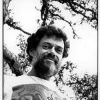
Terence McKenna
Terence Kemp McKennawas an American ethnobotanist, mystic, psychonaut, lecturer, author, and an advocate for the responsible use of naturally occurring psychedelic plants. He spoke and wrote about a variety of subjects, including psychedelic drugs, plant-based entheogens, shamanism, metaphysics, alchemy, language, philosophy, culture, technology, environmentalism, and the theoretical origins of human consciousness. He was called the "Timothy Leary of the '90s", "one of the leading authorities on the ontological foundations of shamanism", and the "intellectual voice of rave culture"...
NationalityAmerican
ProfessionPhilosopher
Date of Birth16 November 1946
CityPaonia, CO
CountryUnited States of America
It is true that when you smoke DMT, for example, at a sufficiently high and prepared dose, you get elves, everybody does. All you need do, is inhale deeply three times, and you know... You want contact? You want elves? You want alien contact? You'll have that!
What we drug people have, that you don't, is repeatability.
The tryptamine molecule has this unique property of releasing the structured self into the over-self.
There is not the Newtonian universe deployed throughout the parsecs and kiliocosms of physical space and the interior mental universe. They are the same thing.
In shamanism and certain yogas, Taoist yoga, claim very clearly that the purpose is to familiarize yourself with this after-death body, in life, and then the act of dying will not create confusion in the psyche. You will recognize what is happening. You will know what to do. And you will make the clean break.
All information is everywhere. Information that is not here is nowhere.
Escape into the dream. Escape, a key thing charged against these drugs, that they are for escapists. I think the people who make this charge hardly dare dream to what degree they are escapist.
But a mature humanity could get into a place where we no longer required these metaphysical spankings from messiahs and flying saucers that come along every thousand years or so to mess up the mess that has been created and try and send people off on another tack. And the way to do this is to look at the abysses that confront man as species and individuals and try to unify them. And I think that psilocybin offers a way out because it allows a dialogue with the over-mind. You won't read about it in "Scientific American" or anywhere else. You will carry it out.
A history-stopping archetype is being released into the skies of this planet, and if we are not careful it will halt all intellectual inquiry in the same way that the Christos archetype halted intellectual inquiry in the Hellenistic Age.
Alcoholism isn't a disease. It's a failure of self-image.
Psychedelic drugs, especially psilocybin, allow a searchlight to be thrown on these deeper levels of the psyche, as Jung correctly stated. But it is not a museum of archetypes or psychic constructs, as he seemed to assume. It is a frontier of wholeness into which any person, so motivated and so courageous as to wish to do it, can go and leave the mundane plane far behind.
What I like to talk about, and what I have very little competition in terms of talking about, is the content of the psychedelic experience.
I have a skeptical and cranky side, and I'm forever puzzled why people believe the, seeming to me, dumb things that they choose to believe.
All the accoutrements that distinguish us from animal existence were put in place when we had a different kind of mind than we have now. We didn't have a mind that favored role specialization, and male dominance, and anxiety over female sexual activity related to feelings of male ownership. That all came later.