Terence McKenna
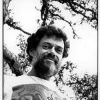
Terence McKenna
Terence Kemp McKennawas an American ethnobotanist, mystic, psychonaut, lecturer, author, and an advocate for the responsible use of naturally occurring psychedelic plants. He spoke and wrote about a variety of subjects, including psychedelic drugs, plant-based entheogens, shamanism, metaphysics, alchemy, language, philosophy, culture, technology, environmentalism, and the theoretical origins of human consciousness. He was called the "Timothy Leary of the '90s", "one of the leading authorities on the ontological foundations of shamanism", and the "intellectual voice of rave culture"...
NationalityAmerican
ProfessionPhilosopher
Date of Birth16 November 1946
CityPaonia, CO
CountryUnited States of America
I mean everybody knows there's something wrong with the world and if you read left wing politicians or deconstructionists or thoughtful historians they will offer thoughtful critiques of our situation. But the question is, you know, the Tolstoyian question; 'What is to be done?'
If we were to place our power at the service of our imaginations rather than our primate politics we would create a civilization worthy of the name.
What's popularly known as the evolution of consciousness, in other words that the expansion of cognitive repertoire that occurs in human beings, which has always been a great puzzle to evolutionary theory, I believe, occurred in the presence of a kind of catalyst for the human imagination.
The real nature of our predicament is completely opaque to us.
If psychedelics are, on any level, to be taken seriously as catalyzers or expanders of consciousness, then we need them, because it's an absence of consciousness that is making this historical transition so excruciating.
The Gaian mind is what were calling the psychedelic experience. Its an experience of the living fact of the entelechy of the planet - and without that experience we wander in a desert of bogus ideologies. But with that experience the compass of the self can be set.
Culture is the greatest barrier to your enlightenment, your education, and your decency.
This is in fact what shamanism is all about, what the end of history is all about, what psychedelic drugs are all about, we are edge-walking on an ontological transformation of what it means to be human.
No more do we create cultural artifacts that are simply our furniture, but now it's our thoughts, our values, are embodied in this [digital] stuff.
To me, the most amazing the most amazing transformation in my lifetime is not the revolution of the Sixties but the counter revolution of the Seventies, where they managed to put the cuckoo clock back together again
What history is, essentially, is a careening, out-of-control effort to find our way back to this state of primordial balance.
The thing that seemed to me so important about the psychedelic experience was that it happened to me. I wasn't reading John Chrysostom or Meister Eckhart. And so I assumed that I am a very ordinary person, therefore, if it happened to me it could happen to anyone.
I connect the psychedelic dimension to the dimension of inspiration and dream.
One of the things that people don't do enough of when they do psychedelic work is spend time in the library.