Tariq Ramadan
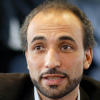
Tariq Ramadan
Tariq Ramadanis a Swiss academic, philosopher and writer. He is the professor of Contemporary Islamic Studies in the Faculty of Oriental Studies at St Antony's College, Oxford and also teaches at the Oxford Faculty of Theology. He is a visiting professor at the Faculty of Islamic Studies, the Université Mundiapolisand several other universities around world. He is also a senior research fellow at Doshisha University. He is the director of the Research Centre of Islamic Legislation and Ethics, based in...
NationalitySwiss
ProfessionWriter
Date of Birth26 August 1962
CountrySwitzerland
I keep on repeating something told to me by an American psychologist: "When you are making a joke about someone and you are the only one to laugh, it is not a joke. It is a joke only for yourself." If people are making a joke they have the right to laugh at me but I will ignore them. Ignoring doesn't mean that you don't understand. You understand it so much that you don't want to react.
Just take Germany and the suffering of Jews during and after the Second World War. It would be legal to ridicule and to laugh at this suffering, but since it was such a trauma on the European conscience, no one is going to do it. It is an open scar, an open wound, an open reality.
It's clear there is nothing in my record supporting terrorism.
We all cherish freedom of speech, but with a reasonable approach and a reasonable use of it. If we come to this, it is a debate. If not, then it is a power struggle. Who is going to win, the Muslim principles or the Western principles?
I've never suffered because of my heritage in Europe.
Many U.S. organizations believe that I am being barred from the country not because of my actions but because of my ideas. The conclusion seems inescapable.
We've got to get away from the idea that scholars in the Islamic world can do our thinking for us. We need to start thinking for ourselves.
The rich stick together; the poor and the marginalised are thrown together.
The world is a complex place, and the influence of the media in its representation and its power of communication and interpretation is a remarkable amplifier of emotions, and of illusions.
Cultures, along with the religions that shape and nurture them, are value systems, sets of traditions and habits clustered around one or several languages, producing meaning: for the self, for the here and now, for the community, for life.
If religious people deny paradise to their opponents or to 'non-believers,' atheists would likewise seek to eliminate 'dangerous' believers with their 'childish' ways and their heads in the clouds.
South Africa never leaves one indifferent. Its history, its population, its landscapes and cultures - all speak to the visitor, to the student, to the friend of Africa.
The 'army camp' that coordinates the agencies of our brain is vulnerable, both in itself and from within. In effect, he who can know and master its functioning and psychology from outside can become twice its master.
Instantaneous and mass communication is the mother of mass naivety. Should we then lose hope? Is there any hope? But to lose hope is as dangerous as to nurture false hope. Where then can we find hope that is responsible?