T. S. Eliot
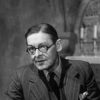
T. S. Eliot
Thomas Stearns Eliot OMwas an American-born British essayist, publisher, playwright, literary and social critic and "one of the twentieth century's major poets". He moved to England in 1914 at age 25, settling, working and marrying there. He was eventually naturalised as a British subject in 1927 at age 39, renouncing his American citizenship...
NationalityAmerican
ProfessionPoet
Date of Birth26 September 1888
CountryUnited States of America
giving political want
Those who say they give the public what it wants begin by underestimating public taste and end by debauching it.
love inspirational life
It is obvious that we can no more explain a passion to a person who has never experienced it than we can explain light to the blind.
pain freedom liberty
Liberty is a different kind of pain from prison.
death dance recovery
What we call the beginning is often the end. And to make an end is to make a beginning. The end is where we start from.
art thinking play
A play should give you something to think about. When I see a play and understand it the first time, then I know it can't be much good.
temptation deeds lasts
The last temptation is the greatest treason: to do the right deed for the wrong reason.
wells
not fare well, but fare forward
thinking want what-you-want
Whatever you think, be sure it is what you think; whatever you want, be sure that is what you want; whatever you feel, be sure that is what you feel.
inspirational new-year new-beginnings
For last year's words belong to last year's language And next year's words await another voice.
light darkness glory
The darkness declares the glory of the light.
fall philosophical shadow
Between the conception and the creation, between the emotion and the response, Falls the shadow.
cracks burden break
Words strain, crack, and sometime break, under the burden.
time past might
time past and time future what might have been and what has been point to one end, which is always present.
believe exposed humans
I do not believe that any writer has ever exposed this bovarysme, the human will to see things as they are not, more clearly than Shakespeare.